

The Best Flooring for Victorian Terraces in PE1 and PE2: What Works in Peterborough's Oldest Streets
Expert guide to carpet and LVT flooring for Victorian terrace homes in Peterborough PE1 & PE2. Learn what works, which brands our fitters recommend, and how subfloor preparation affects your options.
Key takeaways
The short version, checked by our fitting team.
Understanding the Victorian Terrace Subfloor in Peterborough
What Flooring Works Best in Victorian Terraces in PE1 and PE2?
Hallways: Durability and Period Character
Living Rooms in Victorian Terraces: Carpet vs LVT
The Best Flooring for Victorian Terraces in PE1 & PE2: What Works in Peterborough's Oldest Streets
Walk down Lincoln Road in PE1 or along Oundle Road in PE2, and you'll find some of Peterborough's most characterful housing stock — rows of Victorian terraces built between 1870 and 1910, with bay windows, high ceilings, and the kind of proportions that modern new builds simply don't replicate. They're popular with families, professionals, and first-time buyers alike. And when it comes to flooring, they present a specific set of challenges and opportunities that you won't encounter in a 1980s semi or a new build in Hampton PE7.
As carpet fitters and flooring specialists working across PE1, PE2, and wider Peterborough week in, week out, we have fitted floors in hundreds of Victorian terraces. This guide covers what we've learned — the subfloor realities, the materials that work, the ones that fail, and how to make the most of the character that makes these houses worth buying in the first place.
Understanding the Victorian Terrace Subfloor in Peterborough
Before any flooring decision is made, you need to understand what you're working with underneath. Victorian terraces in PE1 and PE2 typically have two completely different subfloor types on different floors:
Ground floor: Suspended timber or solid concrete
Pre-1914 terraces in Peterborough's PE1 and PE2 were almost always built with suspended timber floors on the ground floor — joists spanning between the front and rear walls, with a void below. This means the ground floor breathes, has a slight flex to it, and may have gaps between boards. However, many of these floors have since been replaced with a concrete screed, sometimes as part of a damp-proofing programme in the 1960s–80s, sometimes to level a floor that had warped or dropped. Before you choose your flooring, you need to lift a piece of existing carpet or check a corner to confirm which you're dealing with.
The distinction matters because:
- Suspended timber floors need floating or nail-fixed installations and have different moisture behaviour
- Concrete replacements need damp testing and may require a screed compound before any new floor is laid
- Timber floors with a significant void can flex under foot — too-rigid flooring products like ceramic tile or thick engineered wood can crack at the joints over time if the subfloor movement is significant
Upper floors: Timber throughout
Upper floors in Victorian terraces are always suspended timber — joists and floorboards, sometimes with original pine boards still in good condition underneath decades of carpet. This is where you may have the option to restore original boards rather than cover them, or to choose a floating floor product that works with the natural movement of the timber.
What Flooring Works Best in Victorian Terraces in PE1 and PE2?
Hallways: Durability and Period Character
The hallway is the hardest-working floor in any Victorian terrace. Lincoln Road in PE1, Alma Road, St Paul's Road, Gladstone Street — these are long terrace streets where the hall sees daily foot traffic from shoes, bags, pushchairs, and pets. The original Victorian hallway treatment was often encaustic geometric tiles — which some properties still have and should be preserved wherever possible.
Where tiles are absent or have been replaced with a concrete screed, we recommend one of three approaches:
- Karndean or Amtico tile-effect LVT — a convincing replica of period encaustic tiles, fully waterproof, warm underfoot, and requiring no grout maintenance. The Karndean Da Vinci range has several geometric and stone designs that work exceptionally well in Victorian hallways.
- Sheet vinyl with a stone or tile pattern — the budget option that still provides a hard-wearing, easy-to-clean surface. Less visually convincing than LVT but practical for rental properties.
- Fitted carpet — still a popular choice for family homes in PE1 and PE2 where warmth and quiet underfoot matter more than authenticity. A dense loop pile or commercial-weight twist in a dark, pattern-tolerant colour (charcoal, dark navy, heathered grey) is the most practical choice for a terraced hallway.
Living Rooms in Victorian Terraces: Carpet vs LVT
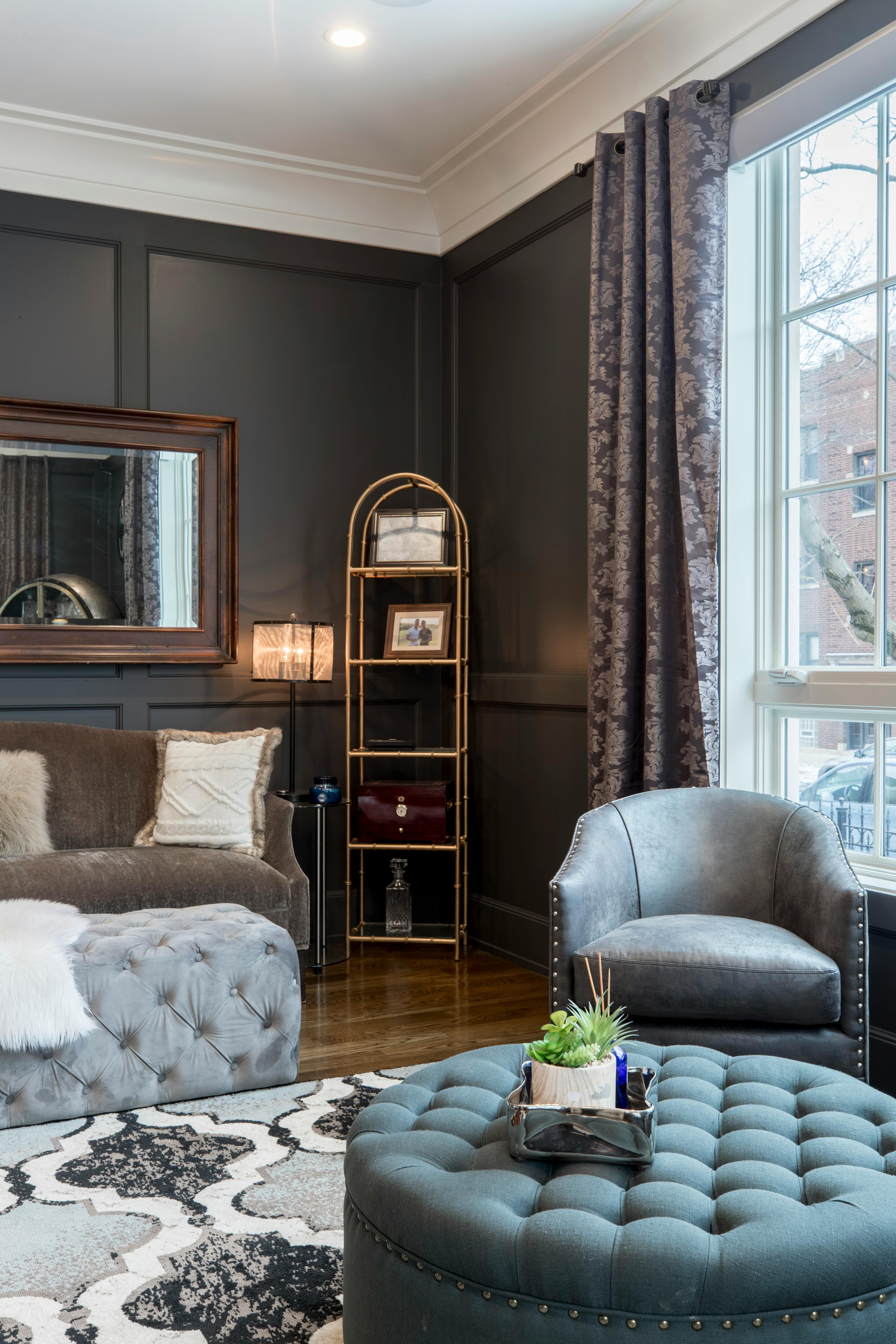
The living room in a Victorian terrace is typically long and narrow, with a bay window at the front and a chimney breast on one or both side walls. The bay window alcove, the fireplace hearth, and the chimneybreast projection all add complexity to the flooring plan — and to the carpet measurement.
Carpet is by far the most popular choice for Victorian terrace living rooms in Peterborough, and for good reason. The high ceilings and tall windows in these rooms mean the floor is a significant element of the room's warmth, both thermal and acoustic. A quality twist pile or saxony from brands like Cormar, Westex, or Victoria Carpets in a warm neutral or classic pattern works beautifully in a bay-fronted Victorian sitting room.
Practical considerations for carpet in a Victorian terrace living room:
- The bay window recess requires careful planning — the carpet must be cut cleanly into the bay and around the window seat if present
- The chimney breast projection means the carpet is not a simple rectangle; a good fitter will plan the seam placement and pile direction carefully
- If the subfloor is suspended timber with some movement, use a rubber or felt underlay with sufficient cushion rather than a thin foam product
LVT is increasingly popular in Victorian terrace living rooms, particularly in PE1 and PE2 properties that have been renovated for the rental market or by homeowners seeking a modern-meets-period aesthetic. Karndean Van Gogh and Moduleo Roots in a warm oak design integrate naturally with the period features — cornices, skirting profiles, and fireplaces — while providing a practical surface that's easy to clean and doesn't retain pet hair or allergens.
Bedrooms: Carpet for Comfort, Period Character Retained
Bedrooms in Victorian terraces in PE1 and PE2 almost universally benefit from carpet. The suspended timber upper floors transmit sound between rooms — hard flooring in a bedroom above a living room creates significant noise transfer. Carpet — particularly a quality twist pile from Westex Carpet Specialists or Ulster Carpets in a Saxony or cut-pile — provides acoustic damping, warmth, and the soft underfoot feel that makes a bedroom genuinely comfortable.
Original floorboards in good condition can also be sanded and sealed in bedrooms if the boards are sound, flat, and gap-free. In PE1 and PE2, we see a lot of original pine boards in upstairs rooms that have been protected by decades of carpet. If you want to expose them, get them assessed by a carpenter before you commit — some are excellent, others have significant gaps or structural issues that make them impractical to expose.
Stairs in Victorian Terraces: The Case for a Runner
The staircase in a Victorian terrace is often the architectural centrepiece — a straight run with turned newel posts, shaped balusters, and a good-quality original handrail. Covering the stairs wall-to-wall with carpet is functional but sacrifices the visual character of the stair structure.
Our recommendation for most Victorian terrace staircases in PE1 and PE2: a fitted carpet runner rather than full-width carpet. A runner — typically 600–700mm wide — runs up the centre of the stair, leaving the original treads or a painted riser visible on each side. This preserves the period character, is easier to replace when it wears (without refinishing the whole stair), and looks significantly better than a wall-to-wall installation in most Victorian properties.
For the runner itself: a natural-fibre product like a wool-blend flatweave from Brockway Carpets (their Dartmoor or Exmoor range) or a patterned loop pile works well in period settings — it wears well on stairs and has the visual weight that the Victorian proportions require. Plain carpets tend to show the stair shadow and any pile direction changes more than patterned products.
Flooring to Avoid in Victorian Terraces in Peterborough
- Laminate on suspended timber ground floors — laminate requires a flat, rigid, dry subfloor. Victorian suspended timber floors flex under foot, which causes laminate joints to separate over time. Laminate is also cold and loud underfoot in rooms with high ceilings and hard walls. We do not recommend laminate for Victorian terraces in PE1 or PE2 as a primary flooring choice.
- Ceramic or porcelain tiles on suspended timber — the flex in the subfloor will cause tiles to crack at the grout lines. Tiles are only appropriate in Victorian terraces where the subfloor has been replaced with a concrete screed or where a board-and-batten reinforcement system has been installed.
- Thick engineered wood on original suspended floors — engineered boards above 18mm are too rigid for a floor with significant movement. If you want engineered wood, use a thinner floating product (10–12mm) with a substantial expansion gap.
Our Work in PE1 and PE2 Victorian Terraces
We work in Victorian terraces across Lincoln Road, Mayors Walk, St Paul's Road, Queen's Road, Oundle Road, and Cromwell Road regularly. Common projects include:
- Full house carpet replacements in family homes — lounge, hallway, landing, and three bedrooms in a day
- LVT fitting throughout the ground floor for rental property refurbishment
- Stair runner installation preserving original tread and riser character
- LVT in the kitchen-diner replacing cold and damaged quarry tiles
Every project starts with a free home visit where we assess the subfloor, discuss your priorities, and bring samples. There's no obligation and no sales pressure.
Call us on 01733 924009 to arrange your free home visit in PE1, PE2, or anywhere across Peterborough and Cambridgeshire. We're available Monday to Friday, 9am–5pm.
Related Reading from Our Peterborough Flooring Team
If this guide was useful, you might also find these helpful:
- Carpet Fitting in Peterborough — Buyer's Guide 2026
- LVT Flooring in Peterborough — Buyer's Guide 2026
- Subfloor Preparation for Carpet Fitting in Peterborough
- How to Measure a Room for Carpet Fitting
- Best Carpet Brands for Bedrooms in Peterborough
- Carpet Fitting in Peterborough — our full service page.
- Book a free home visit with samples — call 01733 924009.
Frequently Asked Questions: Victorian Terrace Flooring in Peterborough
What is the best flooring for a Victorian terrace hallway in Peterborough?
For most Victorian terraces in PE1 and PE2, the best choices are either tile-effect LVT (such as Karndean Da Vinci geometric designs, which reference the original encaustic tiles) or a heavy-duty fitted carpet in a dark, practical colour. Original encaustic geometric tiles, where they survive, should always be preserved. Sheet vinyl with a tile pattern is a cost-effective alternative for rental properties.
Can I use LVT throughout a Victorian terrace in Peterborough?
Yes, with the right subfloor preparation. On the ground floor, confirm whether you have original suspended timber or a concrete replacement before choosing an LVT format — glue-down is appropriate for concrete (once damp levels are confirmed acceptable), while floating or Looselay products suit timber. Upper floors with original suspended boards may need a ply overlay first to reduce flex and close gaps. Our free home visit always includes a subfloor check.
Should I restore original Victorian floorboards or carpet them in Peterborough?
Depends on their condition. Original pine boards in good condition — flat, gap-free, structurally sound — can be sanded and sealed to produce a beautiful, period-appropriate floor. Boards with significant gaps, dropped sections, or structural weakness are better covered with ply and carpet or LVT. We assess existing boards during our home visit and give you an honest recommendation based on what we actually find.
Is carpet better than hard flooring for Victorian terrace bedrooms in Peterborough?
For most PE1 and PE2 bedrooms, yes. The suspended timber upper floors transmit sound between rooms, and carpet provides the acoustic damping that makes bedrooms genuinely liveable. Hard flooring in upstairs bedrooms above a living room creates significant noise impact for anyone below. There's also a comfort and warmth argument — Victorian proportions mean high ceilings and larger rooms that feel cold underfoot without the insulation that carpet and underlay provide.
What style of carpet works best in a Victorian terrace in Peterborough?
We recommend twist pile, loop pile, or cut-and-loop carpets in neutral or muted tones for Victorian terraces — colours that complement the period cornicing, skirting, and door furniture. Plain saxonies in mid-tones (warm greys, terracotta-adjacent beiges, olive-adjacent greens) work well. Strongly patterned carpet can compete visually with the architectural features. Brands like Cormar, Westex, and Victoria Carpets all have ranges appropriate to period properties in Peterborough's PE1 and PE2 postcodes.
Do you offer free home visits for Victorian terrace flooring projects in PE1 and PE2?
Yes — all home visits in PE1 and PE2 are completely free and without obligation. We bring carpet and hard flooring samples to your property, assess the subfloor, measure every room accurately, and provide a fixed written quotation. To book, call 01733 924009 or email contact@cambridgeshirecarpets.co.uk.
Cambridgeshire Carpets — trusted local carpet fitters in Peterborough serving PE1, PE2, PE3, PE4, PE6, PE7 and across Cambridgeshire. Company No. 15769348. Based at 4 The Manor Grove Centre, Vicarage Farm Road, Peterborough, PE1 5UH. See how we work.
Need a floor fitted?
Book a free home visit — we bring samples, measure up and send a written quote within 24 hours.
Book a free home measurementRelated guides


Don't just take our word for it.
Your new floor starts with a conversation.
Tell us what you're planning, choose a convenient time and we'll bring the flooring to you.