

How to Get Pet Hair Out of Carpet: The Methods Peterborough's Fitters Actually Recommend
Our Peterborough carpet fitting team reveals the tools and techniques that actually shift pet hair from carpet — including the rubber squeegee trick most homeowners haven't tried.
Key takeaways
The short version, checked by our fitting team.
Why Pet Hair Is So Stubborn in Carpet
The Tools That Actually Work (And the Ones That Don't)
1. Rubber Squeegees and Pet Hair Rakes - Our Number One Recommendation
2. The Right Vacuum - And How to Use It
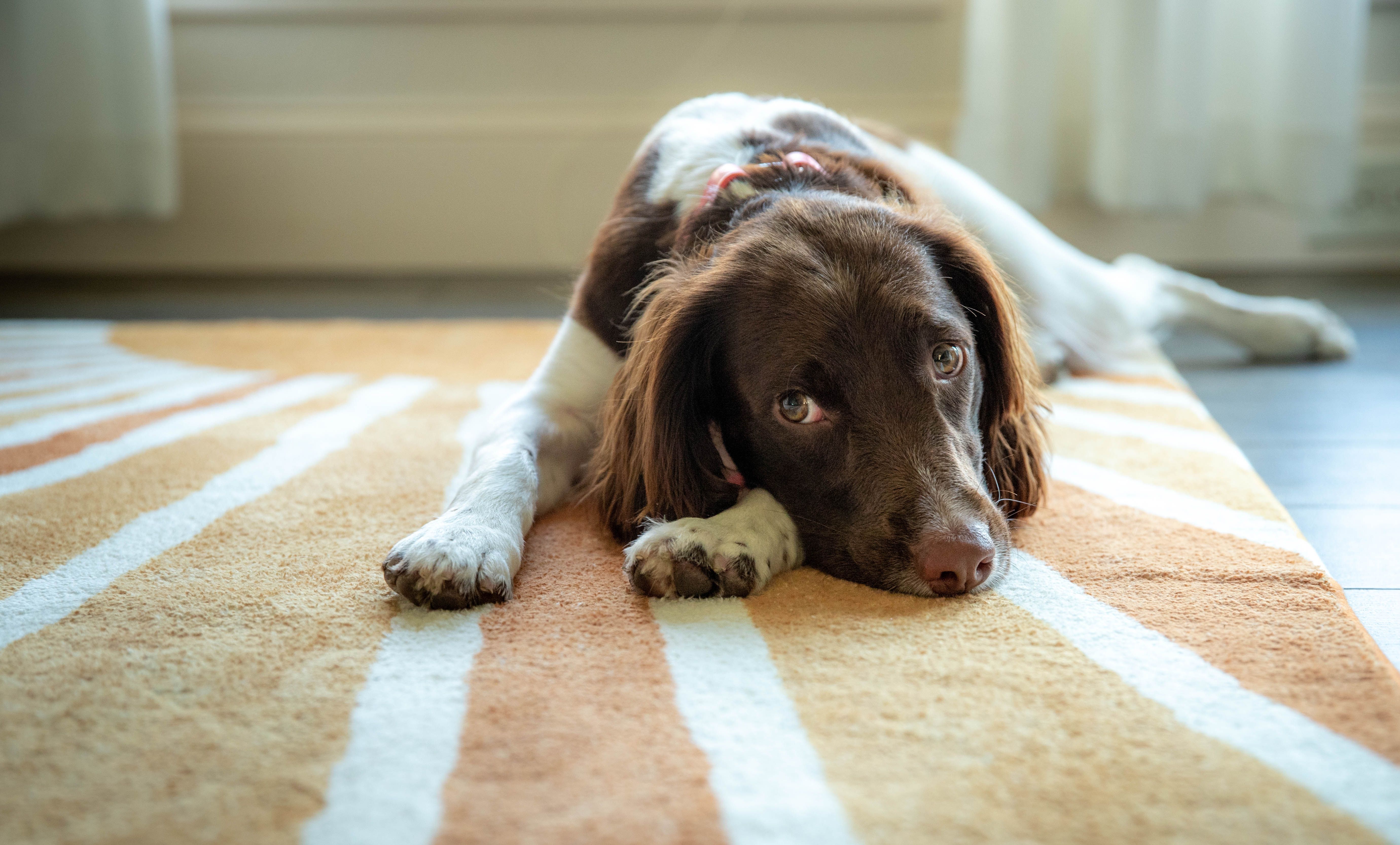
If you own a dog or cat in Peterborough — whether you live in PE1, PE2, PE4 or out in the villages and market towns of Cambridgeshire — you already know the problem. You vacuum on Monday, and by Wednesday your carpet is covered in pet hair again. It builds up in corners, wraps around furniture legs, and clings to carpet fibres in a way that feels almost personal.
We fit carpets across Peterborough and Cambridgeshire every single week, and pet hair is one of the most common frustrations we hear from homeowners. So we asked our fitting team: what actually works? Here's what they told us — the tools, the techniques, and the carpet types that make life easier if you share your home with a moulting dog or shedding cat. Author: Daragh Giannasi | Published: 6 June 2026
Why Pet Hair Is So Stubborn in Carpet
Pet hair doesn't just sit on the surface of your carpet. It works its way down into the pile — especially in cut-pile carpets like saxony and twist pile, the styles most commonly fitted in Peterborough living rooms and bedrooms. Individual strands have microscopic barbs that grip carpet fibres, and electrostatic charge makes them cling harder still.
This is why running a regular vacuum over the top often doesn't solve the problem. You remove the surface layer but the embedded hair stays put — and can actually be pushed deeper with each pass. The underlay beneath your carpet also affects how well hair releases: denser underlays provide a firmer base that makes squeegee techniques more effective.
In homes across Peterborough PE1–PE7, we see the same pattern: homeowners with high-shedding breeds (Labradors, German Shepherds, Huskies, Golden Retrievers) in loop-pile or short-pile carpets cope better than those in deep saxony. Understanding your carpet type is the first step.
The Tools That Actually Work (And the Ones That Don't)
1. Rubber Squeegees and Pet Hair Rakes — Our Number One Recommendation
If you ask any member of our Peterborough fitting team what they'd recommend to a pet-owning customer, the answer is almost always the same: a rubber-edged squeegee or a purpose-made pet hair rake. These tools create friction as they're pulled across carpet fibres, dragging embedded hairs up to the surface in clumps.
A standard window squeegee (cheap rubber-bladed type from any DIY shop) works surprisingly well. Pull it in short, firm strokes in one direction only — don't scrub back and forth — and you'll see hair gathering into rolls that can be picked up by hand or vacuumed away. This technique works on all carpet pile types but is especially effective on twist pile and saxony carpets, which are the most popular choices for family homes across PE1, PE3, PE4, and PE7.
Dedicated pet hair rakes with rubber bristles (available from pet shops and online) take this further, with ergonomic handles that make it easier to work across an entire room. Worth every penny if you have a heavy shedder.
2. The Right Vacuum — And How to Use It
Not all vacuums handle pet hair equally, and technique matters as much as the machine. Here's what our fitters recommend for Peterborough and Cambridgeshire homes:
- Choose a vacuum with a motorised brush roll. Upright vacuums with a rotating brush bar are better at lifting embedded hair than cylinder models with passive nozzles.
- Slow down. Most people vacuum too quickly. Slower passes give the brush bar more time to agitate the pile and release trapped hairs.
- Vacuum in two directions. Go across the room in one direction, then repeat at 90 degrees. The change of angle reaches hairs lying flat in the pile.
- Empty the canister mid-session. A full canister drops suction significantly. Empty it halfway through to maintain full power.
- Use the crevice tool around the perimeter first. Hair accumulates where carpet meets skirting boards and under furniture edges — clear these areas first before doing the main floor, or you'll redistribute the hair.
If your vacuum is consistently struggling with pet hair, it may be worth considering a switch to LVT or vinyl flooring in the rooms where your pets spend most time — these surfaces don't trap hair at all.
3. Fabric Softener Spray — The Trick Most Homeowners Haven't Tried
This one surprises people, but it works. Mix one part fabric softener with three parts water in a spray bottle, lightly mist the affected carpet area (don't saturate it), and leave for 60 seconds. The fabric softener reduces the electrostatic charge that makes hair cling, so the hair can then be vacuumed or squeegeed up much more easily. It also leaves the carpet smelling fresh.
Use sparingly — you want the carpet barely damp, not wet. This technique is particularly useful in living rooms in PE2 and PE3 Peterborough where saxony carpets tend to hold hair deepest.
4. Lint Rollers and Tape — For Stairs and Tight Corners
Lint rollers are ideal for stairs and tight corners where a vacuum or squeegee won't easily reach. They're also perfect for a last pass on carpet you've already cleaned, picking up remaining surface hairs before guests arrive. Masking tape wrapped sticky-side-out around your hand does the same job for free.
On stairs — which our team fits regularly across Peterborough, Huntingdon PE29, and Ely CB7 — hair accumulates at the junction between the tread and riser. A lint roller on a stick or a narrow vacuum attachment works best here. See our stair carpet fitting page for advice on the best stair carpet choices if you have pets.
How Carpet Pile Type Affects Pet Hair Removal
When we supply and fit carpet for pet owners across Cambridgeshire and Peterborough, we always discuss pile type first. It's the single biggest factor in how much pet hair your carpet accumulates — and how easy it is to remove.
- Short loop pile (Berber, cord): Hair sits on the surface rather than embedding. Easiest to vacuum and squeegee. A strong choice for pet owners in high-traffic areas like hallways and living rooms in PE1 and PE2.
- Short cut pile (velvet, Wilton): Slightly more challenging than loop pile but still very manageable with regular vacuuming.
- Twist pile: The UK's most popular carpet type and a solid middle ground. Hair embeds more than in loop pile but less than deep saxony. Regular vacuuming and a monthly squeegee pass keeps it looking clean.
- Saxony and deep pile: The most challenging for pet owners. Long, soft fibres are luxurious underfoot but grip hair tenaciously. If you have a heavy-shedding breed and are considering saxony for your Peterborough bedroom, our team may suggest a solution-dyed polypropylene or a tightly twisted wool-blend alternative that's easier to maintain.
Our most popular carpet brands for pet-friendly homes — Cormar, Westex, Abingdon, and Ulster Carpets — all produce ranges engineered for households with pets, featuring tighter pile constructions, soil-resistant treatments, and hard-wearing fibres. When you book a free home visit, we'll bring samples from these ranges so you can see and feel the difference before committing.
What Our Fitters Do Before Installing Carpet in a Pet-Friendly Home
Preparation makes a significant difference to how well your carpet performs with pets over time. When we fit carpet in homes across Peterborough PE1–PE7, Werrington PE4, Hampton PE7, Huntingdon PE29, and across Cambridgeshire, we follow these steps in every pet-owner property:
- Thorough subfloor preparation. All old adhesive, staples, and debris are cleared before the new carpet goes down. Pet dander and odour can become locked under a poorly prepared subfloor — a problem you don't want six months later.
- Correct underlay selection. We recommend a denser, more resilient underlay for pet-owner homes. Softer underlays compress quickly in areas where pets rest repeatedly, leading to premature carpet wear. A firmer, high-tog underlay provides better long-term support and makes the rubber squeegee technique more effective on the carpet above.
- Precision fitting around furniture and doorways. Gaps are where pet hair accumulates fastest. Tight fitting around radiators, door thresholds, and fitted wardrobes keeps carpet edges sealed and makes daily cleaning easier.
When to Consider Switching to LVT or Hard Flooring
For some homeowners with multiple pets or extremely heavy-shedding breeds, no carpet maintenance routine is enough to make life comfortable. If you're vacuuming daily and the floor still looks grubby, it may be time to consider LVT, vinyl, or laminate flooring for your main living areas.
Luxury vinyl tile (LVT) from brands like Karndean, Amtico, and Moduleo offers the warm look of wood or stone with none of the hair-trapping issues of carpet. Pet hair can be swept or mopped up in minutes, and modern LVT is scratch-resistant to light pet claws. Many Peterborough homeowners choose LVT in the kitchen, hallway, and living room — where pets spend most of their time — and keep carpet for bedrooms.
Sheet vinyl is an excellent option for kitchens and utility rooms where pets eat, drink, and dry off after walks. Easy to clean, waterproof, and available in a wide range of designs, sheet vinyl is one of our most requested flooring types for pet-friendly homes across PE1–PE7 and Cambridgeshire.
If a mixed approach appeals — carpet in bedrooms, hard flooring in living areas — our Peterborough team can advise on the most practical layout for your home and lifestyle.
How Often Should You Deep Clean Pet Hair from Carpet?
For lightly shedding pets (cats, small dogs, short-haired breeds), a weekly vacuum combined with a monthly squeegee pass is usually sufficient to keep carpets in Peterborough and Cambridgeshire homes looking clean. For heavy shedders — Labradors, German Shepherds, Huskies, Border Collies — we recommend:
- Daily: Quick vacuum of high-traffic areas and pet resting spots
- Weekly: Full vacuum of all carpeted rooms using the two-direction technique
- Monthly: Rubber squeegee pass across all rooms + stair lint roller treatment
- Quarterly: Professional steam clean or hot water extraction — this reaches the deepest embedded hair and refreshes the carpet pile
Professional carpet cleaning every 12–18 months is advisable for all pet-owner homes. It removes not just hair but the dander, oils, and odours that accumulate in the pile over time — and significantly extends carpet life.
When Pet Hair Damage Means It's Time for New Carpet
There comes a point when cleaning alone won't restore a carpet that's been heavily shed on for several years. Signs you may need a replacement: flattened pile that won't recover, persistent odour despite professional cleaning, visible matting in pet resting areas, or discolouration from pet oils and dander.
If you're in Peterborough, Huntingdon, Stamford PE9, Ely CB7, Wisbech PE13, or March PE15 and think it may be time for new carpet or hard flooring, we offer free home visits with no obligation. Our team will assess your current floor, listen to how you live, and recommend the most practical solution — whether that's a pet-friendly carpet from the Cormar or Westex range, a full switch to Karndean LVT, or a combination of both.
Related Reading from Our Peterborough Flooring Team
- How to Choose the Right Carpet for a Busy Peterborough Family Home
- The Best Carpet for Werrington & Paston, PE4: Quiet Suburbs, Busy Families & Floors That Last
- How to Clean LVT Flooring Without Leaving Streaks
- Carpet Underlay on Concrete Floors: Which Is Best for Peterborough Homes?
- Carpet Fitting in Peterborough — Supply, Advice & Installation
Ready for a new carpet or flooring that's easier to live with? Call our Peterborough team on 01733 924009 or fill in our contact form for a free home visit — we'll bring samples to you across PE1–PE7 and all of Cambridgeshire.
Need a floor fitted?
Book a free home visit — we bring samples, measure up and send a written quote within 24 hours.
Book a free home measurementFrequently Asked Questions: Pet Hair and Carpet in Peterborough
What is the best carpet type for homes with dogs or cats in Peterborough?
Short loop-pile and tightly twisted carpets are the most practical for pet owners in Peterborough and Cambridgeshire. They resist embedding better than deep-pile saxony and are easier to maintain. Solution-dyed polypropylene and wool-blend twist piles from brands like Cormar and Abingdon are popular choices for PE1–PE7 homes.
Will pet hair void my carpet warranty?
Pet hair itself won't void most UK carpet warranties, but damage caused by pet claws or accidents (staining, soiling) may not be covered depending on manufacturer terms. If you're fitting new carpet and have pets, ask us about solution-dyed ranges with stain protection — these are significantly more resistant to pet-related wear.
How do I get the smell of pets out of my carpet in Peterborough?
Bicarbonate of soda sprinkled liberally over the carpet, left for 30 minutes, then vacuumed up is a highly effective odour treatment. For persistent odour deep in the pile, a professional hot water extraction clean is the most reliable solution. In severe cases where odour has penetrated the underlay, the underlay may need replacing — our fitting team can advise during a home visit.
Can you fit carpet in a house with pets the same day?
Yes — our fitting teams work across Peterborough PE1–PE7, Cambridgeshire, and surrounding areas and typically complete a full-room carpet fit in a single day. We ask that pets are kept in a separate room during installation. Once fitting is complete and the carpet has settled (usually a few hours), it is safe for pets to return.
Is LVT better than carpet for pet owners?
For ease of cleaning, yes — LVT has no pile to trap hair and can be swept clean in minutes. However, many pet owners prefer the warmth and comfort of carpet in bedrooms and living rooms, and the right carpet managed with a consistent routine can perform very well. The best approach for most Peterborough families is a combination: LVT or vinyl in kitchens and hallways, carpet in bedrooms.
How much does a new pet-friendly carpet cost in Peterborough?
Hard-wearing polypropylene twist carpets suitable for pet owners are supplied and fitted from £14 per m², wool-mix twists from £25–£40 per m² and premium wool from £40–£70+ per m², all including underlay and gripper (see our flooring prices page). For an accurate quote, contact us for a free home visit — we'll measure up and provide a written quote with no obligation.
Related guides
Don't just take our word for it.
Your new floor starts with a conversation.
Tell us what you're planning, choose a convenient time and we'll bring the flooring to you.