

Why Your Living Room Floor Should Set the Tone for the Whole House — A Peterborough Design Perspective
Why the living room floor is the most important flooring decision in your Peterborough home — and how to use it to anchor your whole interior scheme.
Key takeaways
The short version, checked by our fitting team.
The living room floor as your interior's anchor point
Why starting with the floor changes the whole home
Carpet in the living room — tonal foundations
LVT in the living room — wide-plank oak and whole-house palette
The Living Room Floor as Your Interior's Anchor Point
Most Peterborough homeowners approach flooring room by room — a carpet here, some LVT there — and wonder why the finished result feels slightly disjointed. The answer, almost always, is that they chose their living room floor last. Or they chose it in isolation.
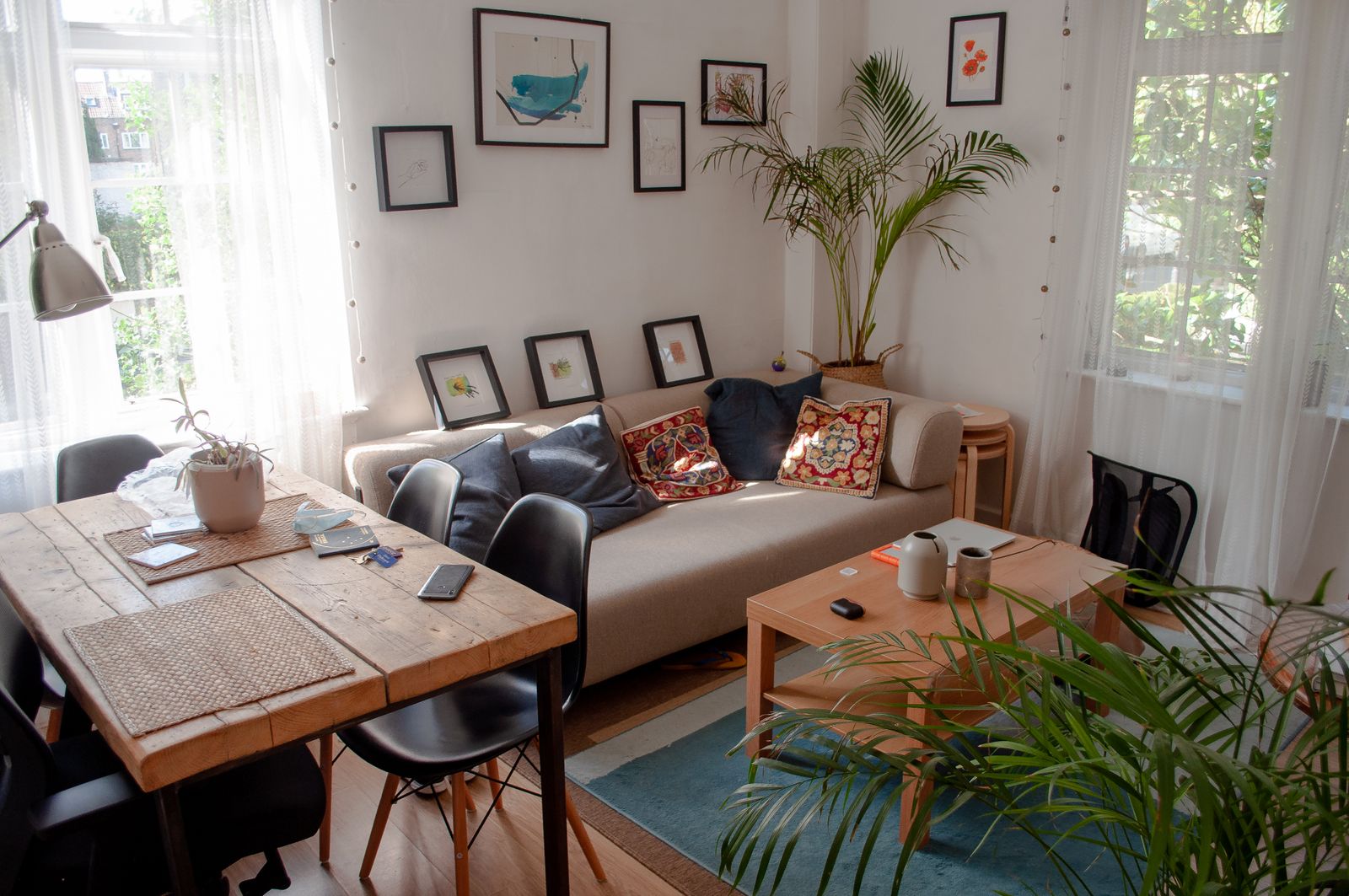
Your living room floor is the single most powerful design decision you'll make for your home. It's the largest continuous surface in the most-used room in the house. Every other flooring decision — the hallway, the kitchen-diner, the landing — should be made with one eye on what's already happening in the living room. When you get it right, the whole house feels designed. When you get it wrong, no amount of paint or soft furnishings will fix the disconnect.
We see this pattern constantly across Peterborough — from Victorian terraces in PE1 and PE2 to new builds in Hampton, PE7. The homes that feel genuinely considered are almost always the ones where someone started with the living room floor and worked outwards from there.
Why Starting with the Floor Changes Everything
Interior designers have always known what many homeowners discover too late: hard surfaces come first, soft surfaces second. Your floor is your room's fixed backdrop — it doesn't move with trends the way cushions and accessories do, and it's the most expensive thing to change. Choosing it last means compromising everything else around it.
When you choose your living room floor first, three things become easier. Palette direction — your floor's undertone (warm golden oak, cool grey stone, mid-toned greige) sets the palette temperature for the whole space. Walls, skirting boards, and furniture all follow from there. Texture and weight — a textured twist pile carpet reads differently to a smooth LVT plank, and both work differently with fabric choices. Locking in the floor texture early gives you a visual anchor that makes softer choices feel intentional. Budget sequencing — if you know the living room floor is your biggest investment, you can make smarter trade-offs in other rooms. A premium Karndean LVT in an open-plan ground floor might mean choosing a mid-range twist pile on the stairs — and that decision is much easier to make cleanly when you've committed to the centrepiece first.
For most Peterborough homeowners, the living room is where the budget should go. It's where you spend the most time, it's where guests see your home, and it's the room that photographs. Get it right and everything else can be calibrated around it.
Carpet in the Living Room — Building a Tonal Foundation
Carpet remains the most popular living room flooring choice across Peterborough, and for good reason. It softens acoustics, adds warmth underfoot, and handles the visual weight of a large open room better than hard flooring in many traditional and semi-detached properties.
The brand that matters most here isn't the one with the flashiest name — it's the one that gives you the right shade and texture for your property type.
For Victorian terraces in PE1 and PE2: A warm-toned textured twist pile sits beautifully against original features like cornicing and timber skirting. Westex Ultra Soft in a greige or warm stone shade (quoted at the free home visit, as is every range named here) is one of our most consistent recommendations for these properties. It's refined enough to suit period homes but hardwearing enough for daily family use.
For 1930s semis and post-war properties in PE2, PE3, PE4: Cormar Primo Grande offers a mid-weight twist pile that works across multiple room types — which matters when you're trying to create flow from the living room into the hallway. Its tonal consistency across colourways makes it easier to achieve a coherent whole-house palette.
For executive homes and larger properties in the Nene Valley villages, PE5: A wool-blend carpet from Ulster Carpets or Westex Alchemy carries the weight these rooms need. Larger rooms require a carpet with enough visual density to anchor them — a lightweight synthetic can look lost in a room over 25m².
For new builds in Hampton and Cardea, PE7: Victoria Carpets Sensation range gives you a softer, plush pile that suits open-plan ground floors where you need the carpet to feel luxurious without dominating the scheme. Its neutral colourways work well alongside the pale oak joinery common in newer Peterborough developments.
The key tonal principle: whatever shade you choose for the living room, it should be one step lighter or darker — not a different colour entirely — from the hallway. This is what creates the sense of a designed interior rather than a collection of rooms.
LVT in the Living Room — Wide-Plank Oak and the Whole-House Palette
Luxury vinyl tile has transformed the living room conversation in Peterborough over the past five years. Where LVT was once primarily a kitchen and hallway product, it's now being specified throughout open-plan ground floors — and increasingly in living rooms as standalone spaces too.
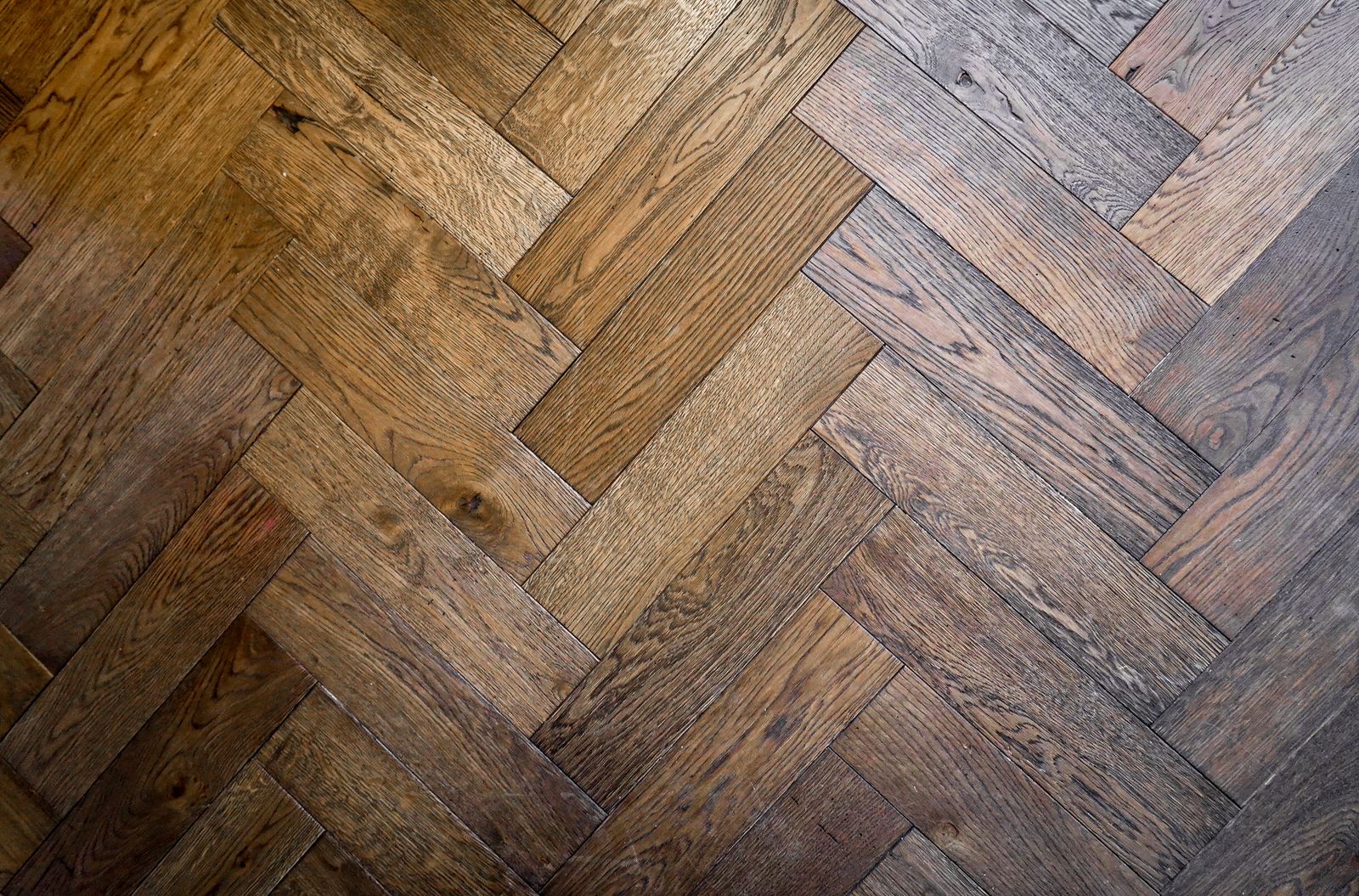
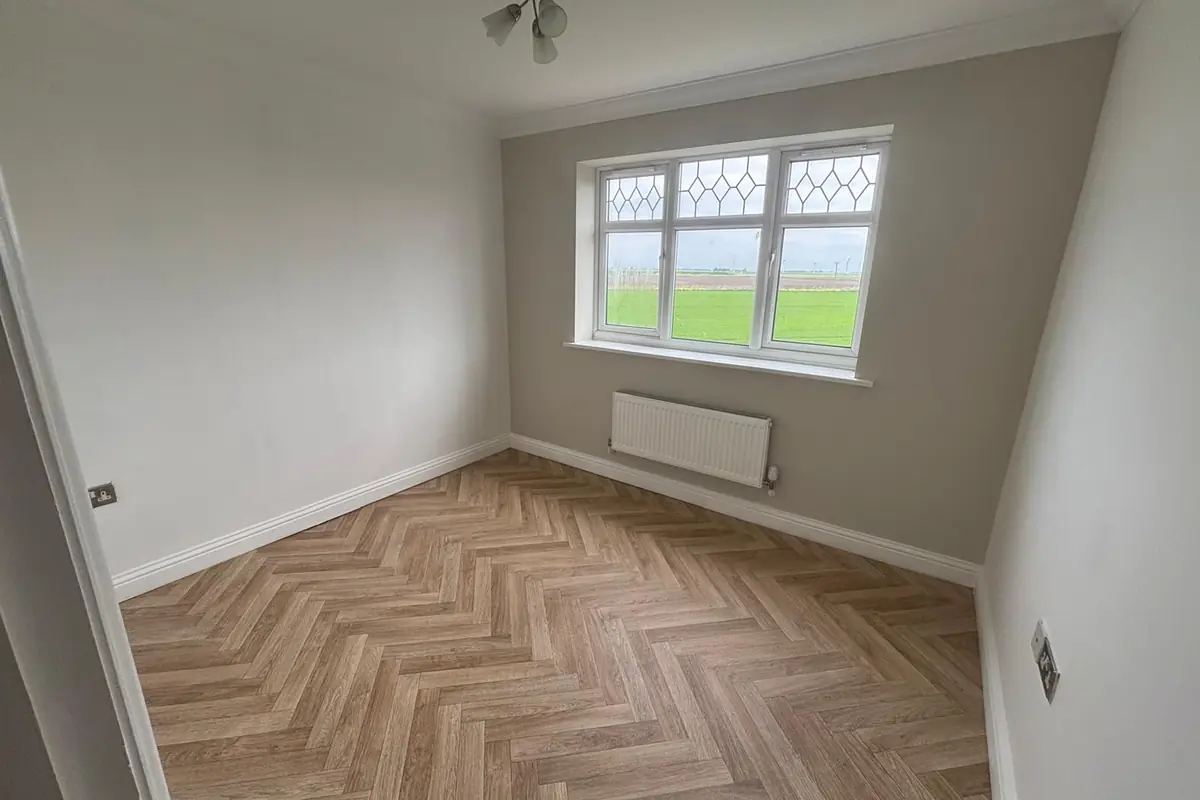
The format doing most of the work right now is wide-plank warm oak. Planks at 220mm and above visually elongate rooms, reduce the number of grout lines per square metre, and carry a warmth and scale that gives even modest living rooms a premium feel.
Karndean Korlok in the Van Gogh Blonde Oak or Warm Limed Oak range (quoted at the free home visit) is one of our most consistent recommendations for Peterborough living rooms. It's a rigid core click product — meaning it can be laid over existing subfloors without extensive prep — and its warm undertone pairs well with the cream and greige paint shades that dominate Peterborough interiors right now.
Amtico Spacia (premium glue-down Karndean and Amtico is £50–£70+/m² supply and fit — see our flooring prices in Peterborough) offers a thinner, more flexible product with an exceptional range of warm and cool oak colourways. It suits properties with perfectly level concrete subfloors — common in Peterborough new builds — where you can take advantage of its precision-fit edge detail.
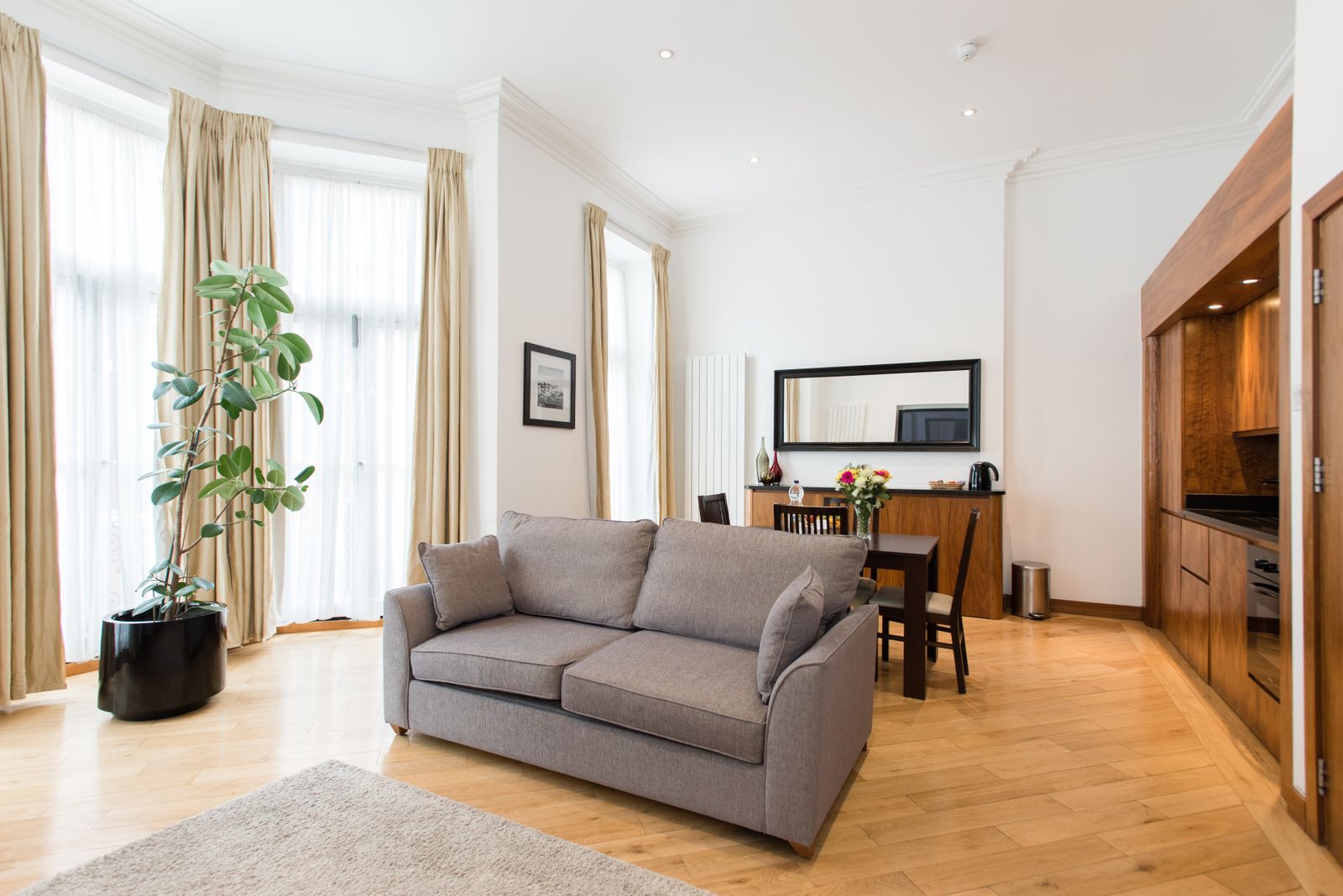
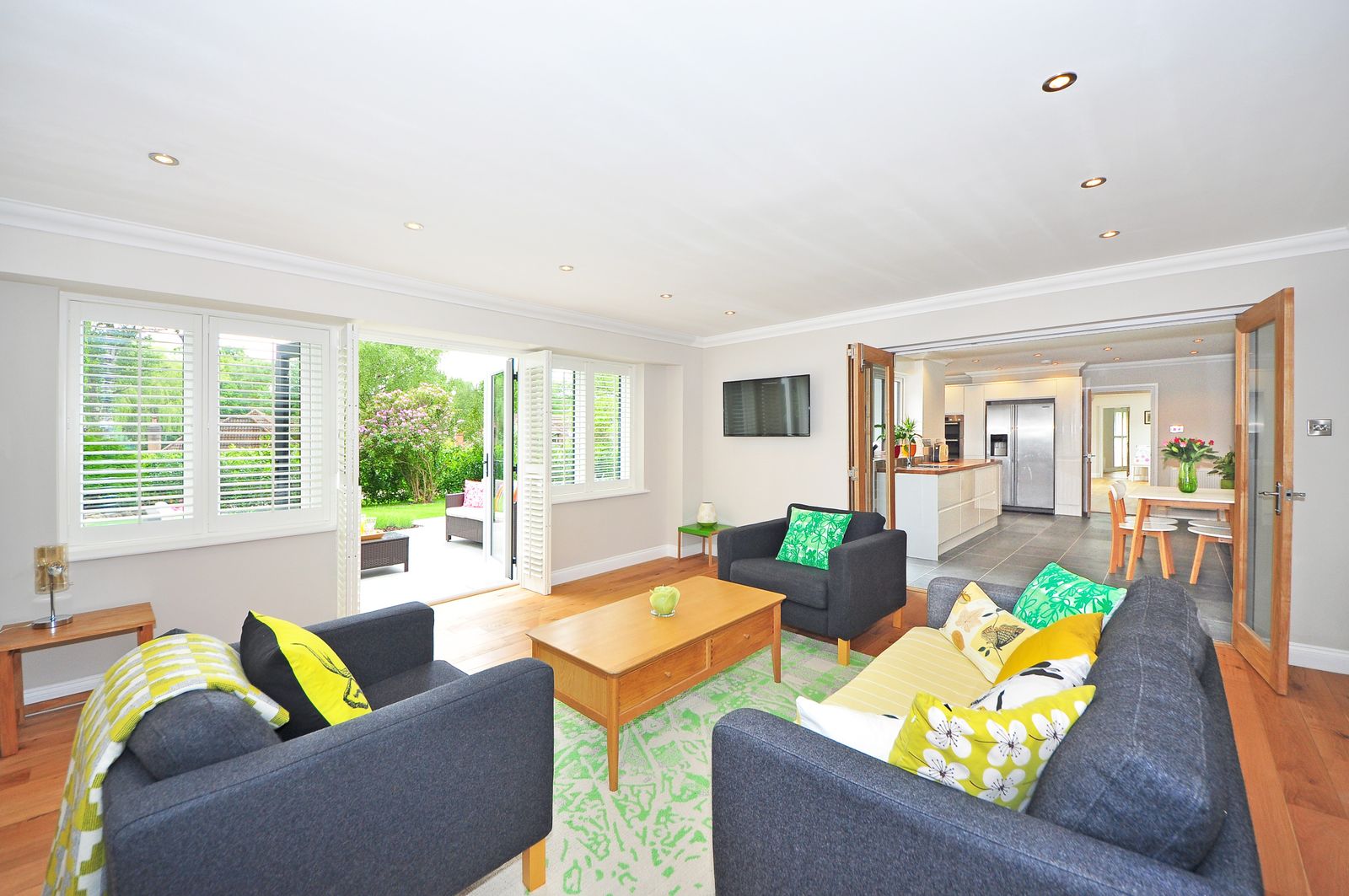
If you're running LVT through from the living room into the kitchen-diner (as most open-plan ground floors do), the product you choose in the living room effectively sets the flooring palette for the entire ground floor. This is where starting with the living room pays the biggest dividend: you choose the product once, it flows through, and the whole ground floor reads as a cohesive space.
Connecting Open-Plan Spaces — Flow Without Sameness
One of the most common challenges we encounter in Peterborough homes — particularly the 2000s and 2010s new builds in Hampton Vale, Cardea, and Stanground South, PE2 — is an open-plan ground floor that needs flooring to create zones without hard divisions.
The most popular solution we're fitting right now is the carpet stairs and LVT below combination: a continuous LVT plank through the kitchen-diner and hallway, with a carpet on the stairs that draws the eye upward. This creates a natural zoning boundary between the ground floor and the upper level without any hard threshold.
When the living room is part of an open-plan ground floor, the LVT running through from the kitchen creates the visual cue that this is a connected space. When the living room is a separate reception room — more common in Victorian and Edwardian properties in Peterborough's PE1 and PE3 streets — carpet becomes the natural choice for that room, with LVT or a quality vinyl in the hallway to manage the traffic.
The critical design principle is tonal continuity, not product sameness. You don't need the same product in every room — but the colours should travel well together. A warm oak LVT in the hall and a warm greige carpet in the sitting room read as a designed sequence. A cool grey LVT next to a warm cream carpet reads as two rooms that haven't been thought through together.
Colours That Travel Well Through a Peterborough Home
The colours we see working best across a range of Peterborough property types share a common characteristic: warmth with restraint.
Greige (warm grey-beige) is the single most transferable shade across living rooms, hallways, and bedrooms in Peterborough homes. It works in PE1 Victorian light and PE7 new-build bright equally well. Most of the Cormar, Westex, and Victoria ranges have at least one greige that reads correctly across different light conditions. If you're unsure where to start, start here.
Warm sand oak for LVT in open-plan spaces carries through from dark Victorian hallways to bright south-facing kitchen-diners without clashing with either the dark skirting of the former or the pale cabinets of the latter.
Pale stone and travertine-effect LVT is increasingly popular in Peterborough new builds, especially in kitchen-diners. It connects naturally with the grey and greige carpet shades on the upper levels because it sits in the same tonal family — cool-neutral — without being identical.
The shades to treat with caution are those that work brilliantly in isolation but fight with everything around them: very dark espresso LVT, strong terracotta tones, and mid-grey carpet that reads blue under certain light. We'd always rather show you how a sample reads in your specific room before committing than have you deal with a decision that looked right in a showroom and wrong at home.
That's exactly why our free home visit exists. We bring the right samples to you across Peterborough — PE1, PE2, PE3, PE4, PE5, PE6, and PE7 — so you can see how a colour reads in your actual light, against your walls, next to your furniture, before you commit to anything.
From Living Room to Hallway — Getting Transitions Right
The threshold between living room and hallway is where a lot of whole-house flooring schemes either click into place or fall apart. Getting this transition right requires planning both floors together, ideally with the same fitter measuring both spaces at the same time.
If you're moving from a living room carpet to a hallway LVT or laminate, the key is a quality threshold bar — machined aluminium or solid brass in a finish that works with your door hardware, not a silver T-bar from a DIY kit.
If you're running the same LVT from the hallway into the kitchen-diner, you can use an invisible edge-joint on glue-down products (best for Karndean and Amtico) or a matching reducer bar on click-lock products that need expansion space.
Stair carpet is its own chapter. Stair carpet should be a tighter-woven, harder-wearing pile than your living room carpet — not a different colour scheme, but a more resilient texture. Brockway Cairngorm, Ulster Sovereign, or any commercial-grade twist pile at 48oz or above gives you the durability a staircase demands while maintaining the tonal continuity of the living room scheme downstairs.
Ready to start with the living room and work outwards? Call our Peterborough team on 01733 924009 or book your free home visit. We'll bring samples to you across PE1–PE7 and all of Cambridgeshire, with no pressure and no obligation — just honest advice on what will actually work in your home.
Need a floor fitted?
Book a free home visit — we bring samples, measure up and send a written quote within 24 hours.
Book a free home measurementDoes the living room floor really need to be chosen first?
Yes — in almost every case. The living room floor is the largest surface in your home's most-used room, and it sets the tonal and textural baseline for every other flooring decision. Starting here means every subsequent choice can be made in reference to something fixed, rather than trying to reconcile a series of isolated decisions at the end. Homeowners who approach flooring this way consistently end up with a more coherent result.
What's the best living room flooring for a Peterborough new build?
For open-plan new builds in Hampton, Cardea, or Stanground South, a warm-oak wide-plank LVT — Karndean Korlok, Amtico Spacia, or Moduleo Roots — running through the ground floor is our most consistent recommendation in 2026. It suits underfloor heating, handles heavy use, and creates the whole-house flow that newer open-plan properties suit best. Expect to pay £35–£70/m² supply and fit depending on the product: £35–£50/m² for mid-range click-lock and rigid-core, and £50–£70+/m² for premium glue-down Karndean and Amtico.
Is carpet or LVT better for a Peterborough Victorian terrace living room?
Carpet is usually the better choice for Victorian terraces in PE1 and PE2, where solid timber or suspended floorboards can present subfloor challenges for LVT, and where the room's acoustic characteristics benefit from a softer surface. A textured twist pile in a warm greige or sand tone — Westex Ultra Soft, Cormar Primo Grande, or Ulster Sovereign — suits both the character of these properties and the light conditions typical in their front reception rooms.
How do I make sure my living room floor connects with the rest of the house?
The key is tonal continuity, not product sameness. Flooring in adjacent spaces should share the same warm or cool temperature as your living room floor — even if the product type differs. A warm oak LVT in the hallway connects naturally to a warm greige living room carpet. A cool grey LVT next to a warm cream carpet creates a visual clash that décor alone won't resolve. We help you test this by showing you how samples read together in your specific light conditions during a free home visit.
Which LVT brands work best for living rooms in Peterborough homes?
Karndean (Van Gogh and Korlok ranges), Amtico (Spacia and Signature), and Moduleo (Roots and LayRed) are the three brands we fit most consistently in Peterborough living rooms. Each has distinct strengths: Karndean's colour stability and rigid core performance, Amtico's precision edge detail and wide colourway range, Moduleo's value relative to performance. Your subfloor type and whether you have underfloor heating will influence which is right for your specific property.
Can I run the same floor from the living room into the kitchen?
Yes, and in an open-plan ground floor it's often the most impactful design decision you can make. Running a continuous LVT plank from the kitchen through the dining space and into the living area — without any threshold bar — creates a single, cohesive ground floor. The product needs to be rated for kitchen use (all three brands above qualify), and your subfloor needs to be level throughout. We assess this as part of our free measure visit across PE1–PE7 and Cambridgeshire.
Related guides
Related Reading from Our Peterborough Flooring Team
- The Best Carpet for Living Rooms in Peterborough — 2026 Guide
- Carpet on the Stairs, LVT Below: Peterborough's Most-Requested Combination
- How to Coordinate Your Floor with Kitchen Cabinet Colours in Peterborough
- The 5 Flooring Looks Cambridgeshire Homeowners Are Requesting Most in 2026
- Colour Drenching and Tonal Rooms: How Peterborough Homeowners Are Using Flooring as a Design Statement

Don't just take our word for it.
Your new floor starts with a conversation.
Tell us what you're planning, choose a convenient time and we'll bring the flooring to you.