

Will My New Floor Feel Cold in a Cambridgeshire Winter? LVT, Carpet & Laminate Compared Honestly
Carpet, LVT and laminate compared for warmth underfoot in Peterborough homes, and what concrete or timber subfloors, underlay, rugs and heating change.
Key takeaways
The short version, checked by our fitting team.
Carpet on a good underlay is the warmest floor underfoot in an unheated room
LVT and laminate both feel cool at first touch, though warmer than ceramic tile or stone
Most of the cold comes from the subfloor: an uninsulated concrete slab or draughty floorboards
Underlay, boarding over gappy boards and rugs all help; never block the airbricks under a timber floor
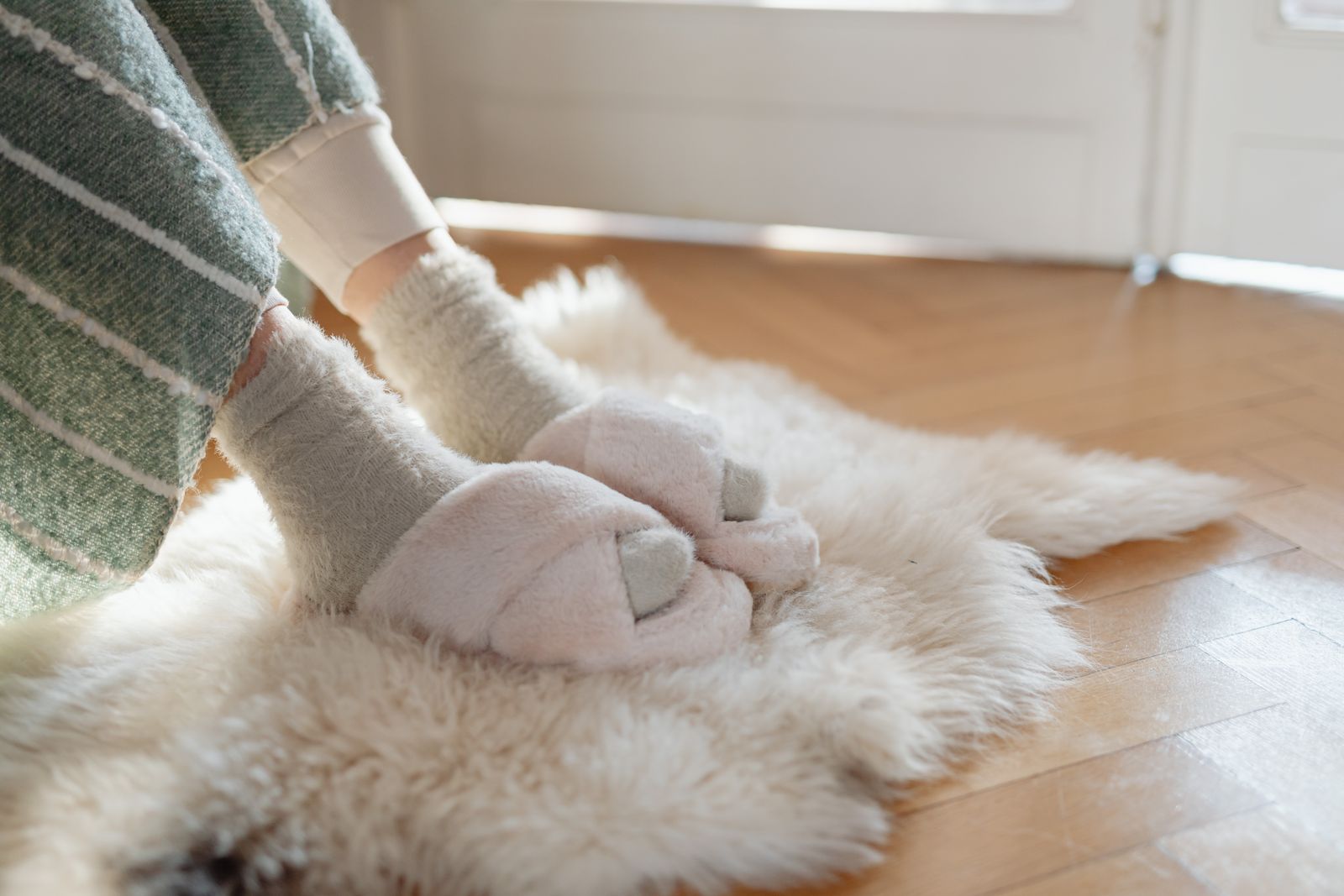
Carpet on a good underlay feels warmest underfoot. LVT and laminate both feel cool at first touch, and the coldest floor is any hard floor laid over an uninsulated concrete slab or draughty floorboards, because most of the chill comes from underneath. What fixes it: the right underlay, a sealed and boarded subfloor, rugs where you stand, or underfloor heating.
That is the short answer our fitters give on home visits across Peterborough and the PE postcodes, from Victorian terraces in PE1 to newer homes in Hampton and Cardea. The longer answer is that a new floor covering changes how the floor feels to the touch; it does not change what the house is built on. We have left temperature figures and energy-saving sums out on purpose: nobody can promise you a number without seeing what is under your floor.
Which Floor Feels Warmest Underfoot: Carpet, LVT or Laminate?
In an unheated room, carpet wins comfortably. Between the two hard floors there is far less to choose. LVT is slightly softer and quieter underfoot than laminate, which many people read as warmer, but both feel cool when you first step on them, and both are warmer to the touch than ceramic tile or stone. This is how they compare:
| Floor | How it feels barefoot | What sits underneath | What helps |
|---|---|---|---|
| Carpet | Warm and soft straight away. The pile and the underlay keep your foot away from the subfloor | Underlay on gripper, over floorboards or concrete | A good underlay matched to the room; boarding over gappy floorboards first |
| Glue-down LVT | Cool at first touch in an unheated room; warmer than ceramic tile or stone | Nothing. It is bonded straight to a smoothed concrete, screed or plywood base | Rugs where you stand or sit; underfloor heating, which it suits very well |
| Click LVT | Cool at first touch, much like glue-down | A thin, firm underlay or a built-in backing | The correct thin underlay; rugs; underfloor heating |
| Laminate | Cool and firm at first touch, similar to LVT | Wood-fibre boards floating on a thin underlay, with a damp-proof membrane where needed over concrete | The correct underlay; rugs; underfloor heating with a suitable underlay |
The column to notice is the third. The closer a thin, dense floor sits to a cold subfloor, the more of that cold you feel.
Why Does a Floor Feel Cold When the Room Is Warm?
Because your foot is not measuring temperature. It is feeling how quickly heat leaves your skin, and two things decide that.
- How readily the surface conducts heat. Dense, solid materials such as vinyl, laminate, tile and concrete draw heat out of your foot quickly. Carpet is mostly fibre and trapped air, which conduct heat poorly, so far less heat leaves your foot. A carpet sample and a vinyl plank left in the same room overnight are the same temperature by morning, yet the plank feels colder.
- How cold the floor itself is. Warm air rises, so the floor is usually the coolest surface in a room. A ground floor is cooled from below as well: by the ground under a concrete slab, or by the moving air under floorboards. A thin hard floor takes on the temperature of whatever it sits on.
So it is mostly the subfloor, and how quickly the surface conducts heat away, rather than the room temperature. That is why turning the thermostat up is a slow way to warm a floor, and why the same LVT that feels chilly in a ground-floor kitchen typically feels fine in an upstairs bathroom with a heated room beneath it.
Is a Solid Concrete Floor Colder Than a Suspended Timber Floor?
They are cold in different ways.
Solid concrete ground floors
A solid floor is a concrete slab sitting on the ground, usually finished with a screed. Many post-war houses and bungalows across Peterborough have one, as do most rear extensions. Concrete is dense, so it soaks up heat steadily and is slow to warm. Older slabs were often laid with little or no insulation beneath them, which gives an even, constant chill across the whole floor. Newer homes, including those in Hampton and Cardea, are built with insulation in the ground floor, so the same hard floor typically feels noticeably less cold there.
A floor covering cannot insulate a slab from below; that is building work. What we can do is choose what goes on top: carpet with an underlay suited to concrete, a floating floor on the correct underlay, or glue-down LVT with rugs or underfloor heating.
Suspended timber floors
Victorian and Edwardian terraces in PE1 and PE2, and 1930s semis in areas such as Woodston, typically have floorboards on joists over a ventilated void, with airbricks in the outside walls. Timber itself is not especially cold to the touch. The problem is air. It moves under the floor by design and finds its way up through the gaps between old boards. The result is a draught at ankle height rather than a cold surface, and it tends to be worst on a windy day, which the flat, open country around Peterborough and the Fens has plenty of.
Never block the airbricks to stop it. That ventilation is what keeps the joists dry. The flooring fix is to secure loose boards and board over them with plywood or hardboard, which closes the gaps and gives a flat base, then fit a dense underlay and carpet, or LVT on the plywood. Carpet alone softens a draught; it does not stop one. Our guide to flooring for 1930s semis in Woodston and Orton goes through this in detail.
Plenty of Peterborough houses have both: original boards in the front room and hall, and a concrete kitchen extension at the back. Each half wants a different approach.
How Much Difference Does Underlay Make?
Under carpet, a great deal. Underlay is a large part of why carpet feels warm: it adds a second insulating layer and stops the pile being pressed flat against the subfloor. For living rooms and bedrooms we typically recommend a 9–11 mm PU foam, with a denser grade on stairs and in hallways. Underlays carry a tog rating, which is a measure of how well a material resists the passage of heat, and on an unheated floor a higher tog means more warmth underfoot. Old underlay that has flattened or crumbled has lost most of that benefit, so we almost always recommend replacing it with the carpet.
Under laminate and click LVT, the job is different. These floors need a thin, firm underlay that supports the joints and quietens the hollow sound of a floating floor. It puts a small break between the board and the slab, which takes the edge off, but it will not make a hard floor feel like carpet. A thicker, softer underlay is not the answer: it lets the joints flex, and they wear early. Glue-down LVT has no underlay at all, because it is bonded to a smoothed subfloor.
On cost, standard underlay and gripper are included in our carpet prices, which start from £14/m² supplied and fitted. Where underlay is priced on its own, it is typically £4–£6/m² for quality PU foam and £6–£8/m² for dense crumb rubber and premium acoustic grades, supplied and fitted. Laminate starts from £18/m² with underlay and fitting included, and LVT from £35/m². The full list is on our flooring prices in Peterborough page, and our underlay page covers the types we fit.
Do Rugs Help on a Hard Floor?
Yes, and they are the cheapest fix there is. A rug does what carpet does: it puts fibre and trapped air between your foot and the floor. Put rugs where bare feet land and where you sit still: beside the bed, in front of the sofa, under a desk, along a hallway.
Two cautions. Rubber- and latex-backed mats can discolour vinyl floors over time, so use a rug underlay that is approved for LVT. And over underfloor heating a thick rug traps heat in one spot, so keep rugs thin or leave the floor clear.
What About Underfloor Heating?
Underfloor heating is the one fix that makes a hard floor actively warm rather than just less cold. It also turns the logic above on its head. The property that makes LVT feel cool in an unheated room, that it passes heat readily, is exactly what you want over a heated floor, which is why glue-down LVT is our usual recommendation there. Laminate and engineered wood work with the right underlay, and carpet works provided the carpet and underlay together are low enough in tog to let the heat through.
So the underlay advice reverses: over underfloor heating you want a low-tog underlay, not a warm one. Every product has its own temperature and tog limits, set by the manufacturer, and our guide to the best flooring for underfloor heating sets out the usual ones. Adding underfloor heating to an existing room is a job for a heating installer or builder, so decide on it before you choose the floor, not after.
Which Floor Should You Choose, Room by Room?
- Bedrooms and living rooms: where you are barefoot or sitting still, carpet is the warm choice. See our carpets in Peterborough, and do not economise on the underlay.
- Kitchens, hallways and bathrooms: water and mud matter more than warmth here, so LVT is the practical floor. Plan for a runner, a mat by the sink or underfloor heating. See our LVT flooring in Peterborough.
- Dry rooms on a tighter budget: laminate gives you a hard floor for less, on the correct underlay, with a rug where you sit. See our laminate flooring in Peterborough.
- Ground floors over old floorboards: whatever you choose, have the boards secured and boarded over first. In our experience that does more for comfort than upgrading the floor covering.
Book a Free Home Visit in Peterborough
The quickest way to find out whether your new floor will feel cold is to let us look at what is under the old one. On a free home visit we check whether the subfloor is concrete or timber, look at the condition of any existing underlay, and bring samples so you can compare carpet, LVT and laminate in your own room. We cover Peterborough, the PE postcodes and the rest of Cambridgeshire. Every floor is fitted by our own team and carries a 2-year workmanship guarantee. Call 01733 924009 to book a free home visit with samples, Monday to Friday (9am–5pm), and you will have a written quote within 24 hours.
Need a floor fitted?
Book a free home visit — we bring samples, measure up and send a written quote within 24 hours.
Book a free home measurementWhich type of flooring is warmest underfoot?
Carpet on a good underlay. The pile and the underlay are mostly fibre and trapped air, which conduct heat poorly, so little heat leaves your foot. LVT and laminate both feel cool at first touch in an unheated room, although both are warmer to the touch than ceramic tile or stone.
Is LVT cold underfoot in winter?
It feels cool when you first step on it in an unheated room, and how cool depends on the subfloor. Over an uninsulated concrete slab it is noticeable; upstairs or in a newer, insulated home it is much less so. Rugs take the chill off, and LVT is one of the best floors over underfloor heating.
Is laminate warmer than LVT?
There is little in it. LVT is slightly softer and quieter underfoot, which many people read as warmer, but both are hard floors that feel cool at first touch. What is underneath matters more than which of the two you pick, so choose on water resistance, noise and budget.
Will new carpet stop draughts coming up through my floorboards?
It will soften them, not stop them. The draught comes through gaps between the boards, drawn up from the ventilated void below. Boarding over the floor first, then fitting a dense underlay and carpet, is what makes the difference. Never block the airbricks, because they keep the joists dry.
Can I use a thicker underlay to make laminate or LVT warmer?
No. Click floors need a thin, firm underlay that supports the joints. A thick, soft underlay lets the boards flex, so the joints wear early and can open. If a hard floor feels cold, add rugs where you stand and sit, or consider underfloor heating with an underlay made for it.
Who fits warm, comfortable flooring near me in Peterborough?
We do. Cambridgeshire Carpets supplies and fits carpet, underlay, LVT and laminate from our showroom at 4 The Manor Grove Centre, Vicarage Farm Road, Peterborough PE1 5UH, covering PE1–PE7 and the surrounding area. Call 01733 924009, Monday to Friday, for a free home visit with samples.
Don't just take our word for it.
Your new floor starts with a conversation.
Tell us what you're planning, choose a convenient time and we'll bring the flooring to you.