

Gripper Rod vs Adhesive Carpet Fitting in Peterborough: When to Use Each Method
Gripper rod suits most homes; adhesive suits carpet tiles, commercial carpet, ramps and some stairs. How each works, compared, with Peterborough prices.
Key takeaways
The short version, checked by our fitting team.
Gripper rod stretch-fitting over underlay is the right method for most Peterborough homes.
Adhesive direct-stick fitting suits carpet tiles, commercial carpet, ramps and areas where stretching will not hold.
On concrete, gripper is fixed with masonry nails or glued, and on timber it is nailed.
Old adhesive left on a subfloor is assessed at the free home visit and itemised in the written quote.
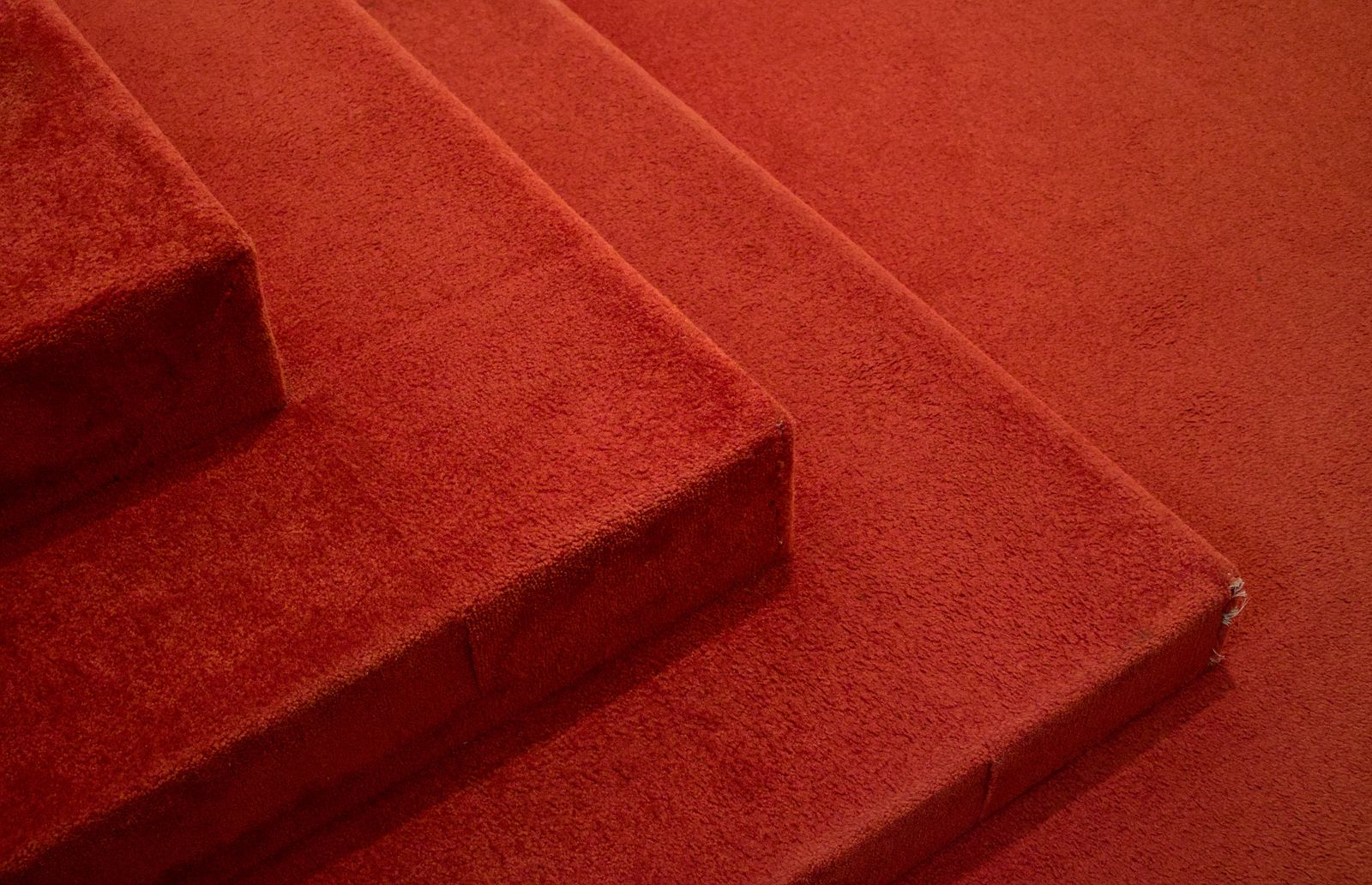
For most Peterborough homes, gripper rod fitting is the right method. The carpet is stretched over underlay and hooked onto gripper strips around the room. Adhesive (direct-stick) fitting suits carpet tiles, contract carpet in offices and schools, ramps and areas where a carpet cannot be stretched. Our carpet prices from £14/m² include underlay and gripper.
Both methods hold a carpet down properly. The difference is how they do it, what sits underneath, and what happens years later when the floor comes up. This guide explains each method, compares them side by side, and covers what we do on concrete, on timber, on stairs, and when old adhesive is in the way of a new floor.
What is gripper rod carpet fitting?
Gripper rod (also called gripper strip or smooth edge) is a thin timber strip with angled pins along its top face. We fix it around the edge of the room, set a small gap back from the skirting. Underlay is laid inside the gripper and the carpet goes on top.
The fitter then uses a knee kicker and, on larger rooms, a power stretcher to pull the carpet tight across the room. The back of the carpet hooks onto the pins, and the spare edge is trimmed and tucked into the gap by the skirting. Nothing is glued to the carpet itself.
This is the standard way of fitting broadloom carpet in UK homes. It is how we fit bedrooms, living rooms, landings and hallways across Peterborough, from PE1 Victorian terraces to newer homes in Hampton and Cardea. You can read more about the service on our carpet fitting page.
Why stretch-fitting works so well at home
- It allows a proper underlay. Underlay adds comfort, warmth and sound reduction, and it helps the carpet pile cope with daily foot traffic.
- It can be re-stretched. If a carpet develops a ripple, a fitter can lift the edge and re-stretch it.
- It comes up cleanly. When the carpet is replaced, it lifts off the pins. There is no glue to scrape off the floor.
What is adhesive (direct-stick) carpet fitting?
With direct-stick fitting, the carpet is glued straight to the prepared subfloor. There is no gripper and no separate underlay. The adhesive is spread with a notched trowel, the carpet is laid into it and rolled down, and the edges are cut tight to the wall.
Contract carpets made for direct-stick usually have a backing designed for it. Carpet tiles go a step further: they are normally laid with a tackifier, a light release adhesive that holds each tile in place but still lets you lift and swap a single tile later.
What is double-stick fitting?
Double-stick is a halfway house. The underlay is glued to the floor, then the carpet is glued to the underlay. You get some of the cushioning of underlay with the stability of a glued floor. It is used in some specialist situations, such as large areas with heavy rolling loads or where a client wants underlay but stretching is not practical. It is less common in homes.
Gripper rod vs adhesive: how do they compare?
| Factor | Gripper rod (stretch-fit) | Adhesive (direct-stick) |
|---|---|---|
| Comfort underfoot | Soft and springy thanks to the underlay | Firmer; you feel the subfloor more |
| Underlay | Yes, laid inside the gripper | No (direct-stick) or glued in place (double-stick) |
| Lifespan considerations | Underlay helps the pile resist crushing; a carpet that loosens can be re-stretched | Will not ripple or move; suited to wheeled chairs, trolleys and heavy traffic |
| Re-fitting and removal | Lifts off the pins; gripper can often stay or be replaced simply | Must be scraped or ground off; adhesive residue left on the subfloor |
| Typical uses | Bedrooms, living rooms, hallways, landings, most home stairs | Carpet tiles, offices, schools, ramps, some stairs and awkward areas |
| Typical price band | Carpet from £14/m² including underlay and gripper | Contract carpet tiles £12–£25/m² |
The short version: at home, comfort and easy future replacement usually win, so gripper is the default. In a busy commercial space, stability and the ability to swap damaged sections usually win, so adhesive or tackified tiles are the better fit.
When should adhesive be used instead of gripper?
We recommend glued or tackified fitting where stretching would not hold or would not last:
- Carpet tiles. Offices, schools, community halls and shops. Tiles are tackified so individual tiles can be replaced. See our carpet tiles page.
- Contract and commercial carpet. Where office chairs roll and trolleys pass, a stretched carpet can loosen over time. Direct-stick keeps it flat. Our commercial flooring in Peterborough page covers this work.
- Ramps and slopes. A carpet cannot be stretched reliably over a ramp, so it is bonded.
- Large open areas. Very wide rooms are hard to stretch evenly. Bonding avoids ripples.
- Some stairs and specialist areas. Curved or unusual stairs, platforms and built-in features sometimes need adhesive in place of, or alongside, gripper.
In homes, the most common reason for adhesive is a home office or playroom where carpet tiles make sense, or a small area where a gripper cannot be fixed.
Does the method change on concrete or timber subfloors?
Both methods work on concrete and on timber. What changes is how the gripper is fixed and how the floor is prepared.
Concrete subfloors
Many Peterborough homes have concrete ground floors, including a lot of the 1960s to 1980s estates in Orton and Bretton and plenty of newer homes. On concrete, gripper is fixed with masonry nails or, where the slab is too hard or nails would crack it, glued down with a suitable adhesive. The underlay needs to suit a solid floor. Our guide to carpet underlay on concrete floors explains the options.
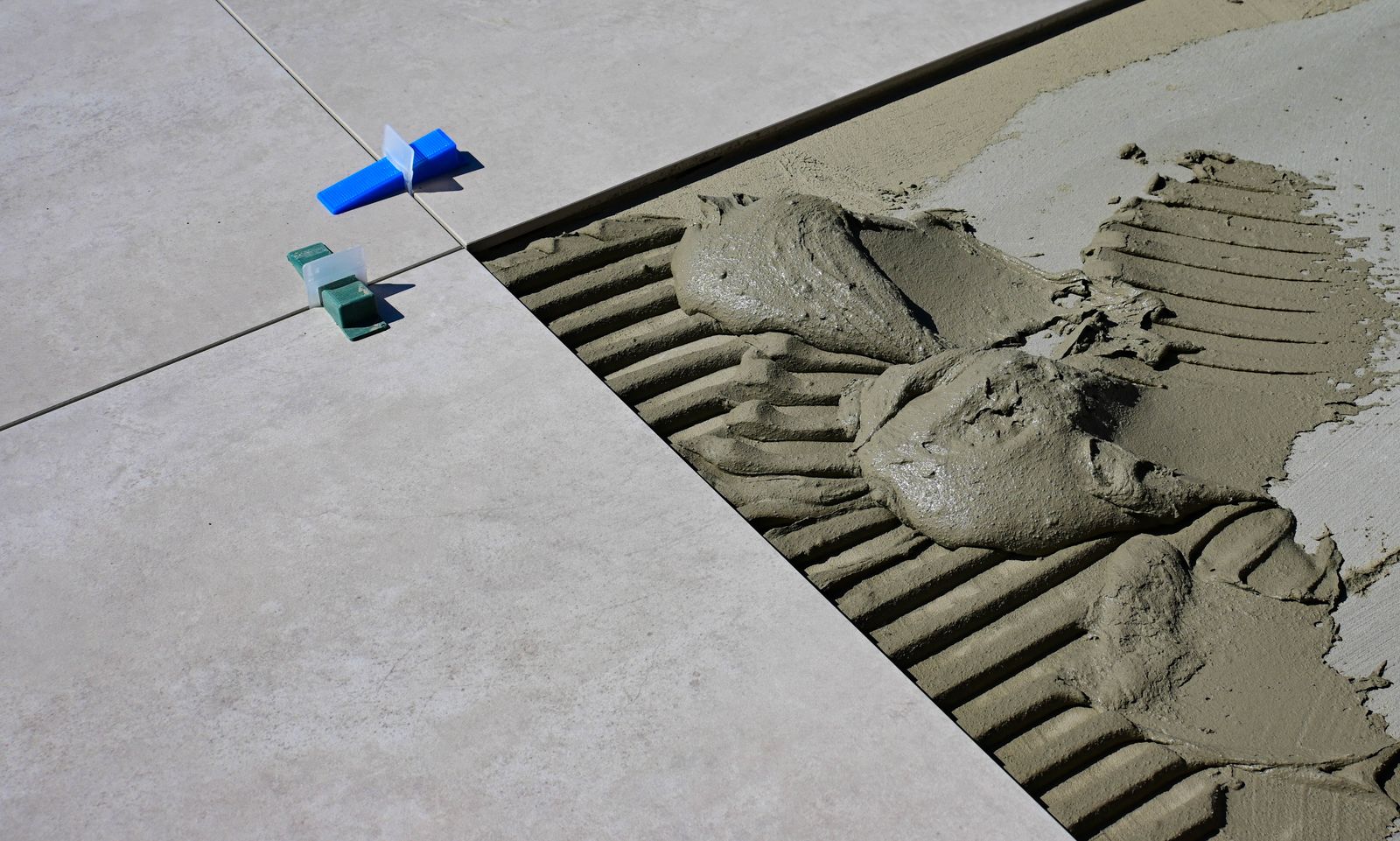
For direct-stick on concrete, the slab must be sound, dry, clean and smooth. If it is uneven, it may need levelling first. Any levelling is shown on the written quote.
Timber subfloors
Suspended timber floorboards are common in older PE1 terraces, and chipboard or OSB is usual upstairs in newer houses. Gripper is simply nailed into timber. Loose or squeaky boards should be fixed first, because a carpet will not hide movement underneath. Direct-stick on timber is possible but less common at home, and boards with gaps usually need overboarding first, which is quoted at the free home visit.
Whatever the floor, preparation decides how the carpet looks in five years. Our guide to subfloor preparation for carpet fitting goes into more detail.
What do we do on stairs?
On most home staircases we use gripper. A strip of gripper sits at the back of each tread and at the bottom of each riser, with underlay fitted to each tread. The carpet is stretched over each step and held at the joint where tread meets riser, then finished either as a waterfall or with cap-and-band, where it is tucked tight under each nosing. Our guide to how stair carpet is fitted in Peterborough covers both styles.
We use adhesive on stairs when gripper cannot do the job: commercial stairs with stair nosings, some curved or winder steps, open-plan or floating steps, and areas where a sharp edge needs a bonded finish. For a home flight, see stair carpet in Peterborough.
Why is my carpet lifting, and is the fitting method to blame?
A carpet coming away at the edges is usually a gripper problem, not a carpet problem. The gripper may be loose, set too far from the skirting, the pins may be worn from a previous carpet, or the carpet was not stretched enough. In most cases the fix is to lift the edge, renew the gripper and re-stretch. Our guide on why carpet lifts at the edges walks through the causes.
A glued carpet that lifts is a different issue. It usually points to a damp, dusty or contaminated subfloor, or the wrong adhesive. That needs the area cleaned back and re-bonded.
What happens to old adhesive before a new floor goes down?
If your old carpet or vinyl was glued down, the adhesive left behind can stop a new floor bonding or sitting flat. Ridges of old glue show through thinner floors such as vinyl and LVT, and can stop a new carpet's underlay lying evenly.
We look at the old adhesive at the free home visit. Depending on the type and condition, it may be scraped, ground back, or covered with a suitable smoothing compound. Adhesive removal is itemised in the written quote, so you can see exactly what it involves. For background, read our guide on removing carpet adhesive from a concrete subfloor.
How much does each method cost in Peterborough?
For gripper-fitted carpet at home, our carpets in Peterborough start from £14/m² supply and fit. That price includes standard underlay, gripper, door bars, moving standard furniture and taking away the old carpet. Premium underlay is quoted as a separate line.
For commercial work, contract carpet tiles are £12–£25/m² installed. Where a glued fit needs extra preparation, such as adhesive removal or levelling, that is itemised in the written quote. Full price bands are on our flooring prices in Peterborough page.
We supply and fit, or supply only. We do not fit flooring bought elsewhere, because we stand behind the whole job with a 2-year workmanship guarantee.
Book a free home visit to choose the right method
Not sure which fitting method suits your room? We will look at the subfloor, the room and how you use it, and recommend gripper or adhesive with a clear reason. We bring samples to your home in Peterborough and across the PE postcodes, and send a written quote within 24 hours. Call 01733 924009, Monday to Friday 9am–5pm, to book.
Need a floor fitted?
Book a free home visit — we bring samples, measure up and send a written quote within 24 hours.
Book a free home measurementIs gripper rod or glue better for carpet?
For most homes, gripper rod is better. It lets us fit underlay for comfort and warmth, the carpet can be re-stretched if needed, and it lifts cleanly when you replace it. Glue is better for carpet tiles, commercial carpet, ramps and areas where stretching will not hold.
Can you fit carpet with gripper on a concrete floor?
Yes. On concrete, gripper is fixed with masonry nails or glued down where nails will not hold. We then lay an underlay that suits a solid floor and stretch the carpet as normal. The concrete needs to be dry and reasonably flat first.
Does glued-down carpet have underlay?
Direct-stick carpet has no separate underlay; it is bonded straight to the subfloor. Double-stick fitting glues the underlay to the floor and the carpet to the underlay. Carpets made for direct-stick often have a backing designed for it.
How are carpet tiles held down?
Carpet tiles are normally laid with a tackifier, a light release adhesive. It stops tiles moving but lets you lift and replace a single damaged tile without disturbing the rest of the floor.
Is removing old carpet adhesive included in the price?
Adhesive removal depends on the type of glue and how much is left, so it is itemised in the written quote after we have seen the floor at the free home visit. Taking away the old carpet is included in our carpet prices.
Who fits carpet near me in Peterborough?
Our own team fits carpet across Peterborough and the PE postcodes from our showroom at The Manor Grove Centre, PE1 5UH. We offer a free home visit with samples and a written quote within 24 hours. Call 01733 924009, Monday to Friday 9am–5pm.
Don't just take our word for it.
Your new floor starts with a conversation.
Tell us what you're planning, choose a convenient time and we'll bring the flooring to you.