

Karndean in a Fenland Farmhouse: Why PE13 and PE15 Homeowners Are Choosing LVT Over Stone Flags
Why glue-down Karndean is a common swap for cold stone flags in Fenland farmhouses, and why we moisture test old solid floors before fitting.
Key takeaways
The short version, checked by our fitting team.
Glue-down Karndean LVT is a common choice over stone flags in Fenland farmhouses because it is warmer to the touch, softer and easier to clean.
Many old solid floors have no damp-proof membrane, so we take moisture readings before quoting any LVT.
Old flags almost always need levelling to give a smooth, flat base, at £5–£15/m² where needed.
Premium glue-down Karndean and Amtico is £50–£70+/m² supply and fit, with any DPM itemised in the written quote.
Short answer: in an old Fenland farmhouse, glue-down Karndean LVT is a common choice over cold stone or quarry-tile flags because it is warmer and softer underfoot and easy to clean. Premium glue-down Karndean is £50–£70+/m² fitted, but only after a moisture test, because many old solid floors have no damp-proof membrane.
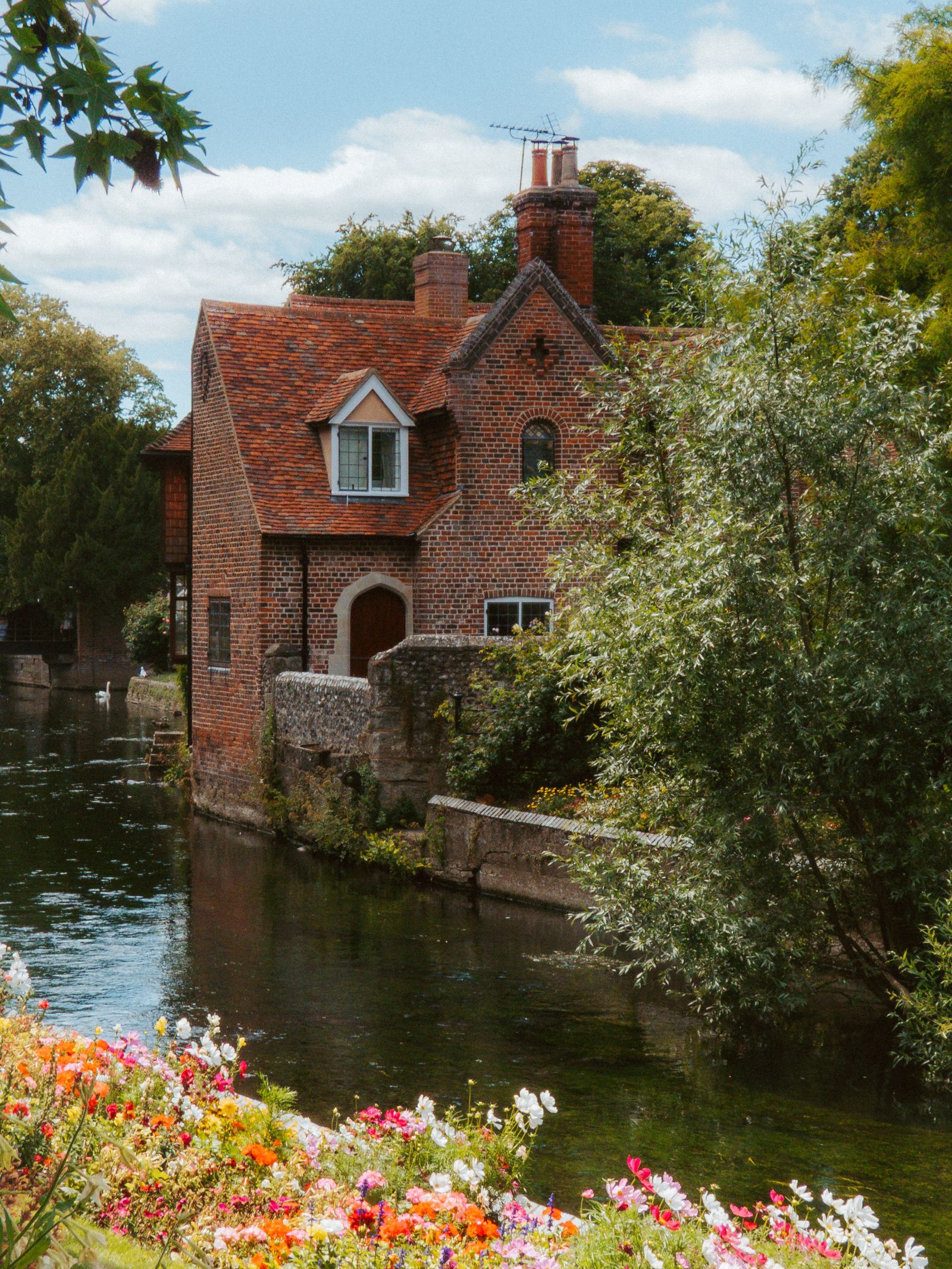
Our team works from the Peterborough showroom and fits floors across the Fens, from Wisbech (PE13) to March (PE15) and the villages around them. We see a lot of older farmhouses and cottages with original flags in the kitchen, hallway and back lobby. Some owners want to keep them. Many want something warmer. This guide sets out the honest trade-offs so you can decide before anyone lifts a tile.
Why do PE13 and PE15 farmhouse owners look at LVT instead of stone flags?
Stone and quarry tiles last for generations, but they have drawbacks in daily life. They are cold underfoot for much of the year. They are hard on dropped plates and tired legs. Uneven flags and wide grout joints catch dirt and can be a trip hazard. In a busy farmhouse kitchen with boots, dogs and children, those things add up.
Glue-down LVT answers most of them. It sits flat and tight to a prepared subfloor, it feels warmer to the touch than stone, it has a little give, and it wipes clean. It also comes in convincing stone-effect and wood-effect designs, so you can keep a farmhouse feel. That is why Karndean flooring in Peterborough and the Fens is such a frequent request from owners of older homes.
It is not the right answer for every house, and we will say so if it is not right for yours.
Karndean LVT or stone flags: how do they compare?
| Factor | Glue-down Karndean LVT | Original stone or quarry-tile flags |
|---|---|---|
| Feel underfoot | Warmer to the touch, slight give | Cold and hard for much of the year |
| Cleaning | Wipe clean, no grout lines to scrub | Joints and porous surfaces hold dirt |
| Moisture | Needs a dry, tested subfloor; does not let moisture pass through | Lets ground moisture evaporate through the surface |
| Subfloor preparation | Must be smooth, flat and dry before fitting | None if kept as it is |
| Look | Stone-effect and wood-effect designs | Genuine character and age |
| Cost | Premium glue-down Karndean £50–£70+/m² supply and fit | Keeping them costs nothing; any building work is outside our quote |
See our full price bands on the flooring prices in Peterborough page.
Is it safe to put LVT over an old solid floor with no damp-proof membrane?
This is the most important question in the whole job. Many older farmhouses and cottages were built before damp-proof membranes were standard. Flags were often laid on earth, ash or lime. Moisture rises from the ground, passes through the joints and stone, and evaporates into the room. The floor "breathes".
Glue-down LVT does not let moisture through. Put it straight onto a damp floor and the moisture has nowhere to go. It can break down the adhesive and lift the floor. It can also push moisture sideways into the base of the walls.
So we test first, every time. We take moisture readings across the floor at the free home visit and explain what they mean. If readings are within the manufacturer's limits, we can plan the fit. If they are not, the floor needs a damp-proof membrane or other work before any LVT goes down. Any DPM is itemised in the written quote, never hidden in a square-metre rate. Our guide to moisture testing before LVT in Fenland homes explains how we do it.
The Fens are low-lying, and in some spots ground water sits close to the surface. That makes testing more important here, not less.
Can Karndean go straight on top of stone flags?
Rarely. Glue-down LVT shows every bump beneath it. Old flags are uneven, and the joints between them can be wide or crumbling. Before any LVT is fitted, the subfloor needs to be:
- Dry, confirmed by testing, with a DPM where needed.
- Sound, with no loose or rocking flags.
- Flat and smooth, usually with a levelling compound over the top.
Subfloor levelling is £5–£15/m² where it is needed. Other preparation, such as overboarding or removing old adhesive, depends on what we find and is quoted at the free home visit. Our article on why we level every subfloor covers the reasons in more detail.
Some owners choose to have the flags lifted and a new insulated slab laid by a builder. That is a building job, done before we arrive. Once the new slab has dried and tested well, we fit the LVT on top.
What would Karndean cost in a typical farmhouse kitchen?
Here is a worked example using our published rates. Take a farmhouse kitchen of 20 m² in premium glue-down Karndean:
- 20 m² × £50 = £1,000 at the lower end of the band.
- 20 m² × £70 = £1,400 at the upper end, and some designs sit above that.
- If the whole floor needs levelling: 20 m² × £5 = £100 up to 20 m² × £15 = £300.
Any DPM, uplift of old coverings and door bars are itemised in the written quote. If you want a lower budget, mid-range click-lock and rigid-core LVT starts from £35/m², though glue-down is usually our preference on solid floors in older homes. Our LVT flooring in Peterborough page compares the options.
Stone-effect or wood-effect: which suits a Fenland farmhouse?
Both work, and the choice usually follows the room.
- Stone-effect suits kitchens, boot rooms and back halls where flags were before. It keeps the farmhouse character with a warmer, flatter finish.
- Wood-effect suits sitting rooms, dining rooms and kitchen-diners. A mid-tone oak look works well against exposed brick and painted beams.
- Mixing is fine. Stone-effect in the kitchen and wood-effect through to the dining room, with a neat threshold between, is a layout we fit often.
We bring samples to the house so you can see them in your own light, which in a farmhouse with small windows can change a colour a lot.
When should you keep the stone flags?
Keep them if they are sound, you like them, and the room is used in a way that suits a hard, cold floor. Keep them if moisture readings are high and you do not want building work. A good rug in the sitting area can make a big difference.
If your home is listed, original flags may be part of its protected character. Speak to the local council's conservation team before lifting or covering them. We will not cover a floor that should not be covered.
Do we cover Wisbech, March and the villages around them?
Yes. Our own fitting team travels from the Peterborough showroom across the Fens. For local detail on housing and popular choices, read our Wisbech PE13 flooring guide and our guide to flooring in March PE15, or see our flooring in Wisbech and flooring in March pages.
Every job comes with a 2-year workmanship guarantee, and we hold £5m public liability cover.
Ready to see Karndean in your farmhouse?
Book a free home visit and we will bring stone-effect and wood-effect samples, test the floor for moisture and measure up. You will get a written quote within 24 hours with every item listed. Call 01733 924009, Monday to Friday 9am–5pm, or use our contact form.
Need a floor fitted?
Book a free home visit — we bring samples, measure up and send a written quote within 24 hours.
Book a free home measurementCan LVT be laid over quarry tiles?
Sometimes. The tiles must be sound, dry and well bonded, and the surface usually needs levelling so the joints do not show through. We test for moisture first, because many old floors have no damp-proof membrane. If the readings are too high, the floor needs a DPM or other work before LVT goes down.
Will LVT cause damp problems in an old farmhouse?
It can if it is fitted onto a damp floor without testing. Glue-down LVT does not let moisture through, so moisture can build up under it or move into the walls. That is why we take moisture readings first and only fit when the floor is within the manufacturer's limits or has a suitable DPM.
How much does Karndean cost per square metre?
Premium glue-down Karndean and Amtico is £50–£70+/m² supply and fit. Subfloor levelling, where needed, is £5–£15/m². A damp-proof membrane, uplift and door bars are itemised separately in the written quote. Mid-range click-lock and rigid-core LVT starts from £35/m².
Is LVT warmer than stone flags?
Yes, to the touch. Stone draws heat from your feet, while LVT feels closer to room temperature and has a little give. It is a thin covering, though, so it will not insulate a cold floor on its own. For real warmth you would need insulation below, which is a building job.
Do you fit Karndean near me in Wisbech or March?
Yes. Our own team travels from our Peterborough showroom to homes in Wisbech, March and the surrounding Fenland villages. We come to you for a free home visit with samples, test the floor and send a written quote within 24 hours.
Can I fit my own LVT and have you lay it?
No. We supply and fit, or supply only. We do not fit flooring bought elsewhere, because we cannot stand behind materials we did not supply. Choosing supply and fit means one team is responsible for the testing, preparation and the finished floor.
Related guides
Related Reading from Our Peterborough Flooring Team
- Why Moisture Testing Matters Before Fitting LVT in Fenland Homes
- Is Karndean Worth the Money? An Honest Guide for Peterborough Homeowners
- Click-Lock vs Glue-Down LVT in Peterborough: Which is Right for Your Home?
- Wisbech PE13 Flooring Guide: Period Homes, New Estates and Every Room
- Rural Cambridgeshire Flooring: Cottage Kitchens, Hallways and Bedrooms
Don't just take our word for it.
Your new floor starts with a conversation.
Tell us what you're planning, choose a convenient time and we'll bring the flooring to you.