

Why We Level Every Subfloor Before Fitting in Peterborough — And What Happens to Floors When You Don't
Why we level every subfloor before fitting, what fails when it's skipped, and what it costs in Peterborough. Call 01733 924009
Key takeaways
The short version, checked by our fitting team.
Flatness matters more than level: LVT and vinyl need no more than about 3mm deviation under a 2m straightedge
Skipping levelling causes telegraphing, glue-down bond failure, click-joint gapping and uneven carpet wear
Concrete floors are levelled with smoothing compound; timber floors are overlaid with plywood or hardboard
Levelling typically costs £3–£18/m² in Peterborough depending on the base and method
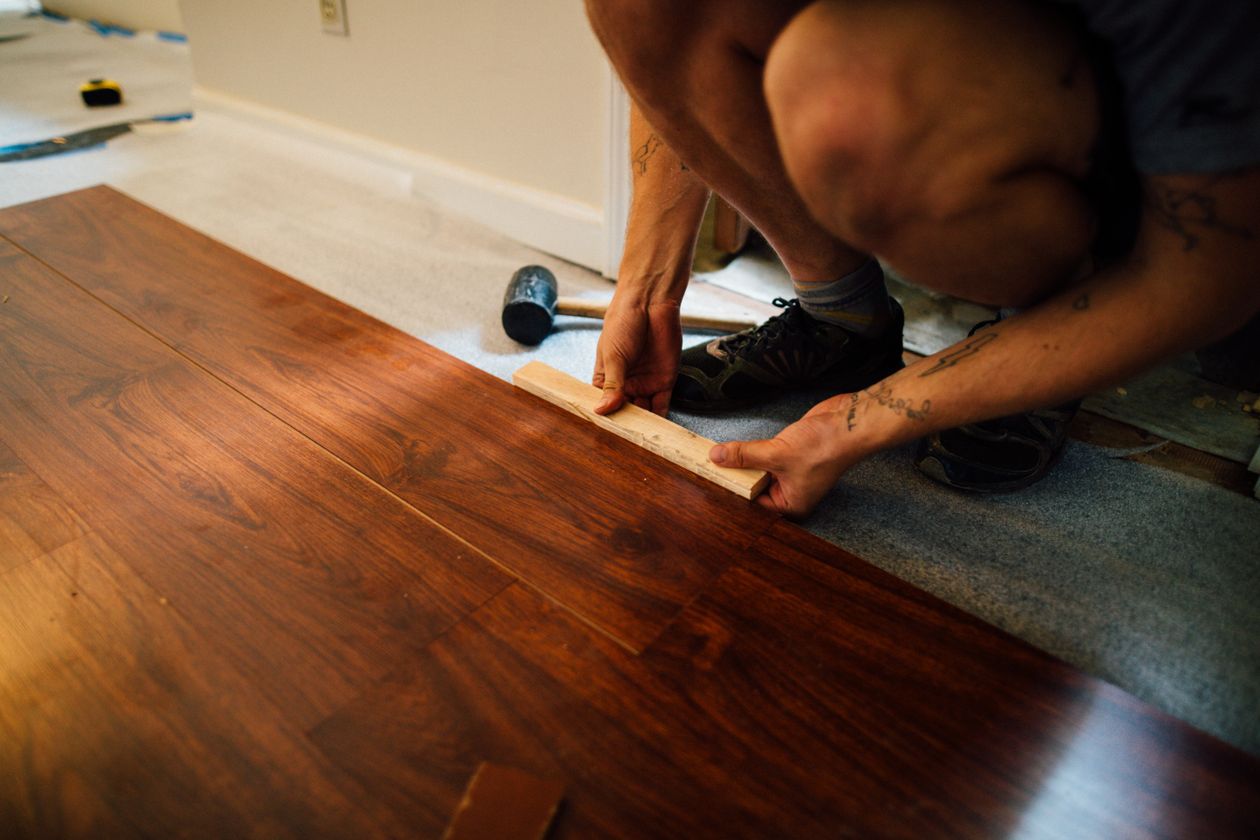
Every floor we fit in Peterborough starts the same way: before a single plank of LVT, sheet of vinyl or roll of carpet comes off the van, our fitters put a straightedge across the subfloor and find out how flat it really is. If it isn't flat enough, we level it. It is the least glamorous part of the job, it adds time and sometimes cost, and it is the step most often skipped when a quote looks surprisingly cheap. This guide explains why we treat subfloor levelling as non-negotiable across PE1–PE7, what actually happens to floors when it's missed, and how to tell whether your own floor needs it.
If you want the wider picture of subfloor checks for carpet specifically — loose boards, old adhesive, hardboard overlays — our subfloor preparation guide for carpet fitting covers that. This post focuses on one question: flatness, and why it matters more than most people think.
What "Level" Actually Means to a Flooring Fitter
Homeowners often use "level" and "flat" interchangeably, but to a fitter they are different things. A floor can be slightly out of level — sloping gently from one side of the room to the other, as many older Peterborough houses do — and still be perfectly acceptable for new flooring. What matters far more is flatness: the absence of humps, dips, ridges and hollows over a short distance.
The way we measure it is simple. We lay a two-metre straightedge across the floor in several directions and look for gaps underneath. The widely used benchmark for resilient floor coverings such as LVT and vinyl is the SR1 surface regularity class, which allows no more than about 3mm of deviation under a two-metre straightedge. Manufacturers such as Karndean, Amtico and Moduleo build their fitting instructions around a smooth, flat, sound base, and a floor outside that tolerance can put a warranty at risk.
Carpet is more forgiving because underlay absorbs small irregularities, but it is not immune — as we explain below.
What Happens to Floors When You Don't Level the Subfloor
This is the part most people never hear about until it's too late. Here is what we are regularly called out to look at when a floor has been laid over an unprepared base.
LVT and vinyl: telegraphing
Luxury vinyl tile and sheet vinyl are thin and flexible. That is part of what makes them comfortable and quiet, but it also means they take the shape of whatever is beneath them. Every trowel mark, old adhesive ridge, crack or dip shows through the surface — fitters call this "telegraphing". Under a kitchen spotlight or low winter sun through patio doors, a floor that looked fine on day one can reveal every flaw in the screed underneath. It can't be fixed without lifting the floor.
Glue-down LVT: bond failure
Adhesive needs full, even contact. Where the subfloor dips, the tile bridges the hollow and never properly bonds. Over months of foot traffic those spots start to feel hollow, then edges lift, then tiles move. It is one of the main reasons we are cautious about choosing between click-lock and glue-down LVT without first checking the floor.
Click LVT and laminate: joint stress and bounce
Rigid-core click LVT and laminate flooring can span small imperfections, but not dips. Where a plank sits over a hollow it flexes every time someone walks on it. That movement works the click joints loose, causing gapping, peaking at joints, creaking and — eventually — broken locking profiles. Once a click joint has snapped, that board has to be replaced.
Carpet: uneven wear and visible ridges
A good underlay hides minor imperfections, but a pronounced ridge between two floorboards or a lip where old tiles were removed will show as a line in the carpet surface. Over time the pile wears faster on the high spot, especially in hallways and on landings. On stairs, uneven treads make it harder to get a tight, even finish on stair carpet.
What We Typically Find Under Peterborough Floors
The subfloor under your existing flooring depends largely on when and how your home was built. These are the patterns our fitters see most often across the city and surrounding villages.
- Victorian and Edwardian terraces (Millfield, New England, West Town, PE1): suspended timber floors with boards that have cupped, shrunk and been lifted for decades of plumbing and wiring work. Often a patchwork of heights where boards have been replaced.
- 1930s semis (Woodston and the older parts of Orton, PE2): timber ground floors with gentle sagging mid-room, and sometimes a concrete kitchen extension that doesn't quite meet the height of the original floor.
- 1960s–1980s estates (Bretton, Werrington, Paston, Orton Goldhay): concrete ground floors that frequently still carry old thermoplastic tiles or black bitumen adhesive, leaving ridges and pockmarks once removed.
- New builds (Hampton PE7, Cardea, Great Haddon, Stanground South): screeds that are generally sound but can have trowel ridges, high spots at joints between pours, and gaps where floor panels meet on upper storeys. A floor being "developer-finished" does not automatically make it flat enough for LVT — see our new build flooring service for how we handle these.
- Fenland concrete slabs (Whittlesey, March, Thorney): older slabs that may have settled or cracked on the peat and clay soils, and which also need moisture checks. Our guide to moisture testing before LVT explains that side of the preparation.
How We Level a Subfloor
The method depends on what the subfloor is made of and how far out it is.
Concrete and screed floors
We start by removing anything loose — old tile, flaking paint, weak surface screed — and grinding down high spots and adhesive ridges. The floor is then primed so the levelling compound bonds and doesn't dry out too fast. Next, a flowable smoothing compound is mixed and poured, spread to the required depth and left to find its own flat surface. Most jobs need a few millimetres; badly out floors may need a deeper, fibre-reinforced compound. Once cured, the surface is checked again with the straightedge before any flooring goes down.
Timber floors
Liquid levelling compound on its own is not the right answer for a suspended timber floor, which moves with the seasons. Instead we re-fix any loose or squeaking boards, plane or sand proud edges, and then overlay the floor with hardboard or plywood, fixed at close centres. For LVT and vinyl we usually specify plywood, because it gives a stiffer, flatter base; where needed, a thin smoothing compound designed for timber is applied over the ply. For carpet, a hardboard overlay is often all that's required.
Drying time
Smoothing compound needs to cure before flooring goes on top. For a typical thin application this is usually overnight, which is why a job involving levelling may be split across two visits. We plan this in at the free home visit so it never comes as a surprise on fitting day.
What Subfloor Levelling Costs in Peterborough
Levelling is priced per square metre and depends on the base and the depth needed. These are the ranges we use in our published guides:
- Self-levelling compound on concrete (standard depth): £8–£18/m²
- Plywood overlay for uneven or bouncy timber floors: £6–£12/m² supply and fit
- Hardboard overlay (timber floors, mainly under carpet): £3–£6/m² supply and fit
- Old adhesive removal (light residue): £4–£8/m²
On a typical kitchen-diner that can add a noticeable sum to the job — but set against the cost of lifting and replacing a failed LVT floor, it is small. Full ranges for materials and fitting are on our flooring prices page.
Why a Cheaper Quote Sometimes Leaves This Out
When two quotes for the same room are far apart, subfloor preparation is one of the first places to look. Some quotes assume the floor is fine without anyone checking; others list levelling as "if required" and add it on the day. We would rather tell you at the survey. Every quote we give states whether levelling is needed, what method we'll use and what it costs, so you can compare like for like.
How to Check Your Own Floor Before a Survey
You don't need special equipment for a rough idea. Lay a long, straight spirit level or a length of straight timber across the floor in a few directions and look for daylight underneath. Roll a marble or small ball across the room. Walk the floor in socks and feel for soft spots, bounce or ridges. Note any creaks. None of this replaces a professional check, but it helps you spot problems early and ask the right questions.
Book a Free Subfloor Check in Peterborough
Every free home visit from our team includes a subfloor assessment, whether you're planning vinyl flooring, LVT, laminate or carpet. We'll check flatness and moisture, explain exactly what your floor needs, and include it in a clear written quote — covering homes across Peterborough, the PE postcodes and the rest of Cambridgeshire. Our team is available Monday to Friday. Call 01733 924009 to book your free home visit, and we'll make sure the floor under your new floor is right first time.
Need a floor fitted?
Book a free home visit — we bring samples, measure up and send a written quote within 24 hours.
Book a free home measurementDo all floors need levelling before new flooring is fitted?
No. Many floors are flat enough already, particularly well-laid modern screeds. The point is that we check every floor with a straightedge before fitting, and only level where the floor falls outside the tolerance the flooring needs. LVT and sheet vinyl need the flattest base; carpet with a good underlay is the most forgiving.
Can LVT be laid straight onto floorboards?
Not directly. Floorboards move, have gaps and are rarely flat enough, so every board edge would eventually show through thin LVT. We re-fix loose boards and overlay the floor with plywood first, which gives a stable, flat base for Karndean, Amtico or Moduleo.
How long does self-levelling compound take to dry?
For a typical thin application, most compounds are ready to take flooring after drying overnight, though deeper pours and cold, damp conditions take longer. We allow for this when planning the job, which is why some fittings with levelling are split across two days.
How much does subfloor levelling cost in Peterborough?
As a guide, self-levelling compound on concrete is £8–£18/m², a plywood overlay on timber is £6–£12/m² and a hardboard overlay is £3–£6/m². The exact figure depends on the floor's condition and the depth needed, and it is always itemised in our written quote.
My new build floor looks flat — does it still need checking?
Yes. New build screeds in Hampton, Cardea and Great Haddon are usually sound, but trowel ridges, high spots and joints between floor panels are common. A developer finish is not the same as a surface prepared for LVT, so we always check before fitting.
What happens if flooring is fitted over an uneven subfloor?
Depending on the floor type, you may see imperfections showing through vinyl or LVT, glue-down tiles lifting, click joints gapping, creaking or breaking, and carpet wearing unevenly on high spots. Most of these can only be fixed by lifting the floor, which is why levelling first is the cheaper option.

Don't just take our word for it.
Cambridgeshire Carpets have fitted carpet in our property multiple times and each time the service, speed and carpet/underlay quality has been phenomenal. Several years later the carpet is going strong. Will be using you guys again. Thank you
Read on GoogleAbsolutely thrilled with our new flooring! It's completely transformed the space — the quality is amazing, it looks beautiful. A huge thank you to the team for the fitting as well — they did an incredible job. Everything was finished to such a high standard, with real attention to detail, and the whole process felt smooth and professional from start to finish. Couldn't be happier with how it turned out. Highly recommend!
Read on GoogleAmazing service, where do I even start… needed a new carpet for all rooms in the house. I believe I called on the Monday and within 24 hours, I had a quote and work was ready to be done. Lads were very professional and very informative. Would definitely recommend
Read on GoogleHad my stairs and bedroom and landing carpeted. Fast, friendly, professional service they did a great job. Will definitely use again and recommend to everyone.
Read on GoogleThanks for a great service and at very short notice too. The carpets in my home look so lovely. I will definitely use you again and recommend you to friends and family.
Read on GoogleOmar came out to fit the new flooring at our salon. He done us a great deal. He completed in quicker time than estimated and even gave use useful advice for other work we was planning for the shop. Would recommend and use again. Thanks
Read on GoogleReally good communication. Fast turn around between initial contact and my flooring being finished. Very happy with the end product. Omar was very friendly and professional. Couldn't recommend enough
Read on GoogleVery good and helpful bunch of lads! Great response, great lead time and very understanding on what you want/need! Highly recommended will be getting them to do the rest of my house
Read on Google
Your new floor starts with a conversation.
Tell us what you're planning, choose a convenient time and we'll bring the flooring to you.